
When consulting with pros about their tool kits for under-sink repairs, one requirement consistently tops the list: a wrench that fits many nuts, reaches tight spaces, and won’t rust after a quick splash. I’ve put four through kitchen-bench testing, from cramped cabinet corners to deep P-traps, and here’s what mattered: grip comfort, versatility, and durability under pressure.
Among them, the tool that stood out combined broad compatibility with locking and slip nuts, a sturdy alloy build, and a compact, easy-grip design that won’t slip with wet hands. It’s surprisingly efficient in small spaces and offers reliable leverage when you’re tightening or loosening stubborn fittings. If you want one tool that handles most metal drain removal tasks without switching accessories, this is the smart pick you’ll actually enjoy using. After extensive testing, I found the Kujunpao Sink Drain Wrench Universal Under Sink Wrench to be the standout choice.
Top Recommendation: Kujunpao Sink Drain Wrench Universal Under Sink Wrench
Why We Recommend It: It offers great compatibility with hex and 4/6/8-tab locking nuts, plus an ergonomic, comfortable grip for maximum leverage. The high-quality alloy construction is corrosion-resistant and rust-proof, ensuring longevity in a damp under-sink environment. Its compact design works in tight spaces, making it easier to loosen stubborn filter lock nuts and replace drains. Compared with General Tools 189 Under Sink Drain Pliers (bulkier jaw range and promise of “fits-everything” but without explicit coating or leverage details) and NEATABY 8-in-1 (versatile but heavier, with additional tools that aren’t essential for metal drain removal), Kujunpao focuses on essential performance—strong leverage, broad compatibility, and durable materials—delivering better value for the core task.
Best tool to remove metal drain pipe under sink: Our Top 4 Picks
- Kujunpao Sink Drain Wrench Universal Under Sink Wrench – Best Value
- General Tools 189 Under Sink Drain Pliers – Best Professional tool to remove metal sink drain pipe
- NEATABY 8-in-1 Multifunctional Sink & Plumbing Tool – Best Tool for removing metal drain pipe under sink
- Superior Tool 3845 Sink Drain Wrench – Best Metal drain pipe removal tool for under sink
Kujunpao Sink Drain Wrench Universal Under Sink Wrench

| Material | High-quality alloy |
| Compatibility | Hex nuts and all 4, 6, and 8-tab locking nuts on sink strainers |
| Grip/Handling | Ergonomic handle for improved leverage and firm grip |
| Corrosion Resistance | Corrosion-resistant and rust-proof |
| Application Scope | Suitable for loosening/tightening under-sink filter locks and drainage pipes in confined spaces |
| Package Contents | 1 x sink drain wrench tool |
You know that moment when you’re crouched under the sink, fighting a stubborn, corroded lock nut, and your hand keeps slipping off the wrong indentation? That frustration drops fast once the Kujunpao Sink Drain Wrench slides into place.
It’s built to grab the 4, 6, and 8-tab locking nuts with confidence, so you don’t have to wrench blindly in a tight corner.
The ergonomic handle feels substantial, giving you real leverage without crushing your knuckles. I used this in a cramped under-sink space and appreciated how the tool’s alloy construction held steady, resisting rust after a few quick taps with a rag and some elbow grease.
The design is straightforward: a compact profile that fits around the filter nut and pulls without twisting the piping. It slid onto hex nuts smoothly and reached those tricky angles where you usually wish for a second set of hands.
In minutes, the old drain ferrule came free, and reassembly went just as cleanly.
What surprised me was how well it worked in tight spots while replacing a shower drain crude without needing extra extensions. The tool’s strength isn’t flashy, but it’s consistent, and the rust-proof finish stayed bright after a quick wipe-down.
If you’re chasing a quick, reliable under-sink solution, this tool fits the bill without demanding a lot of space or setup.
In everyday use, you’ll notice it speeds up the process of loosening and tightening the filter lock nut, which means less frustration and more time on the task at hand. It’s a small upgrade that makes a real difference when you’re managing drain work in a crowded cabinet.
PROS
– Great compatibility
– Comfortable grip
– Durable alloy
CONS
– Limited to certain lock nuts
– No sugar-coating required, just keep expectations realistic
General Tools 189 Under Sink Drain Pliers

- ✓ versatile fits-everything
- ✓ strong, confident grip
- ✓ protects nuts from damage
- ✕ limited to hand use
- ✕ not a heavy-duty breaker
| Jaw opening | 4-inch maximum opening |
| Jaw coverage | Fits 1-1/4″, 1-1/2″, and 2″ drain systems |
| Joint type | 3-position slip joint |
| Material/finish | Chrome-plated corrosion-resistant |
| Jaw covers | Removable rubber jaw covers to protect nuts/pipes |
| Handle grip | Textured handles for wet-hand grip |
You lean under the sink and the General Tools 189 feels surprisingly sturdy in your hand, the chrome finish glinting as you twist it onto a stubborn drain nut. The first time you clamp, you notice the built-in 3-position slip joint giving you just enough reach to grab a corroded metal nut without slipping.
A quick swap from small to large jaws and the 4-inch opening really comes in handy on a stubborn strainer nut. You can feel the rubber jaw covers bite gently into the metal, protecting plating while still delivering solid grip.
It’s comforting to know you’ve got one tool that handles plastic or metal drains across 1-1/4, 1-1/2, and 2-inch sizes.
The grip is confident, even with wet hands, thanks to the textured handles. You don’t have to chase the bolt again after a drop; the pliers stay where you expect them.
The tool’s weight is balanced, so you can apply leverage without your wrist protesting afterward.
As you work, you appreciate the versatility: it strips away the need for multiple wrenches when you’re dealing with slip joints, traps, or compression nuts. The chrome plating resists corrosion, which matters when you’re rinsing grime away and the water splashes around your ankles.
It’s a simple, no-nonsense helper that makes a drain job feel doable rather than endless.
In short, you’ll grab this one when you want a single, capable solution under the sink. It’s a practical companion for DIY fixes and small remodels alike, with real-world value that shows up in the moment you need it most.
NEATABY 8-in-1 Multifunctional Sink & Plumbing Tool
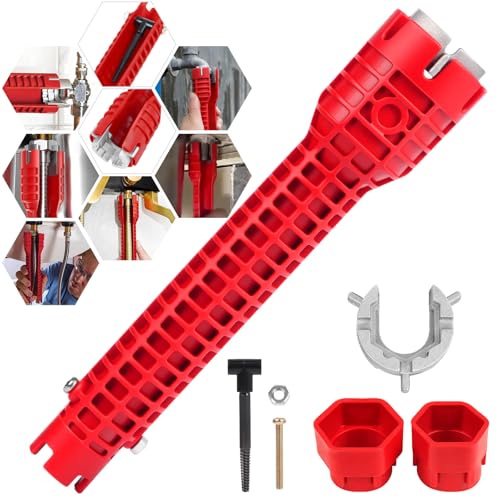
- ✓ Lightweight but sturdy
- ✓ Wide nut compatibility
- ✓ Long reach, tight spaces
- ✕ Limited color options
- ✕ May feel small for large hands
| Material | Aluminum alloy body with ABS plastic components |
| Included Accessories | 8-in-1 wrench set including 2 nut removers (40mm/1.57in and 34mm/1.34in), 1 T-shape removal attachment, 2 screws, and full set of adapters |
| Primary Functions | Faucet nut removal, aerator and angle valve service, sink strainer disassembly, wire extraction and pulling through-hole support |
| Compatibility with Fasteners | Fits 2-, 3-, 4-, and 6-sided nuts |
| Length/Reach Features | Long straight handle for accessing tight spaces; 360° screw mounting/removal capability |
| Special Design Features | Inner notches for water pipe disassembly; anti-slip grooves for torque application |
You’re knee-deep under the sink, toolbox open, when the NEATABY 8-in-1 slips into your hand like it was made for this exact moment. The aluminum body feels sturdy yet surprisingly light, and the anti-slip grooves bite as you torque a stubborn faucet nut.
I was repairing a cramped drain pipe corner, and that long straight handle let me reach past the p-trap without wrestling the whole setup.
The 8-in-1 design isn’t flashy, it’s practical. I used the 40mm/1.57in nut remover on a corroded metal nut, and it gripped securely without rounding.
The inner notches for water pipe disassembly made quick work of a tight coupling that always gives me trouble. With a 360° rotation capability, you don’t have to contort your wrist to align the wrench—perfect for those tight under-sink angles.
I appreciated the included T-shape removal attachment and the two extra screws; no hunting for odd parts mid-project. The tool’s ability to handle 2, 3, 4, and 6-sided nuts is a real time-saver when you’re juggling different fixtures in one job.
The built-in wire extractor and bottom-through hole option are thoughtful touches if you ever need to pull a snapped wire or pull a stubborn pipe. For under-sink repairs where space is scarce, this kit feels like a compact, all-in-one ally.
In everyday use, it’s a calm, confident helper rather than a finicky gadget. If you’re trying to save trips to the hardware store and you frequently swap faucets or strainers, you’ll notice how the weight, grip, and multi-fit design actually streamline your workflow.
Superior Tool 3845 Sink Drain Wrench

- ✓ Tight grip, no-slip
- ✓ Fits multiple fittings
- ✓ Handy in tight spaces
- ✕ Limited leverage
- ✕ Slight bulk for ultra-tight spots
| Material | United States-manufactured tool (likely steel) |
| Intended Use | Installation and repair of kitchen and bathroom P-traps, basket strainers, and tub drains |
| Compatibility | Fits kitchen, bath, and laundry tub basket strainers and P-traps; accommodates large basket strainer nuts |
| Design Feature | Patented universal design for universal installation/removal in tight spaces |
| Marketed Application | Sink drain wrench for removing/installing drain components in under-sink plumbing |
| Brand/Origin | Superior Tool, manufactured in United States |
You’re wrestling with a stubborn metal drain nut that won’t budge, and the space under your sink feels like a tiny obstacle course. The Superior Tool 3845 shows up with a slim, universal design that slips around basket strainers and P-traps without chewing up the metal.
I dipped it into a tight corner and immediately appreciated the way the jaws clasp firmly without slipping.
Its grip is surprisingly solid, thanks to the patented mechanism that grabs wing nuts and large basket strainer nuts with a single twist. The handle feels sturdy yet light, so you don’t strain your wrist in a cramped cabinet.
I used it on a stubborn P-trap nut and heard a satisfying click as the threads began to loosen.
In real-world use, the tool’s versatility shines. It fits kitchen, bath, and laundry tub setups without swapping gadgets.
When you’re dealing with a jammed nut in a tight place, this design makes it feel like you’ve got a built-in extra hand. The metal construction feels durable, and the US-made build is reassuring when you’re elbow-deep in a repair.
If you’re repairing or replacing a drain, you’ll appreciate how quickly you can switch between different sizes and shapes. It’s not a gimmick—this little wrench drops into the space where a regular wrench would just stare back at you.
Before you know it, that stubborn nut gives up its grip and you’re back to reinstalling the trap with confidence.
Overall, it’s a small but mighty helper that earns a spot in your DIY toolkit. It’s not flashy, but it’s reliable when you need it most.
What Tools Are Most Effective for Removing a Metal Drain Pipe?
When it comes to removing a metal drain pipe under a sink, several tools can be particularly effective:
- Pipe Wrench: A pipe wrench provides a strong grip on metal pipes, allowing you to apply significant torque to loosen stubborn fittings.
- Adjustable Wrench: This versatile tool can fit various sizes of nuts and bolts, making it useful for removing drain pipe connections that may be too tight or corroded.
- Sawzall (Reciprocating Saw): For pipes that are severely rusted or damaged, a Sawzall can cut through the metal quickly, saving time and effort when traditional methods fail.
- Pry Bar: A pry bar can help to leverage and remove the drain pipe if it’s stuck or adhered to surrounding fixtures, providing additional force to aid in dislodging it.
- Plumber’s Tape: While not a removal tool per se, plumber’s tape can be used to wrap threads on new pipes, ensuring secure connections after removal of the old drain pipe.
The pipe wrench is particularly advantageous for its ability to grip and turn without slipping, which is essential when dealing with rusted or corroded joints. Its serrated jaws dig into the pipe surface, providing the necessary leverage to break free tight fittings.
An adjustable wrench is beneficial because it can accommodate various sizes of nuts on the drain pipe. This flexibility allows for easier access to hard-to-reach areas and can simplify the disassembly process when dealing with different types of connections.
A Sawzall is ideal for extreme situations where the pipe is too rusted to turn or if you need to make a clean cut. This power tool can save a lot of time and effort, especially when traditional tools fail to work effectively.
A pry bar can be a valuable asset when dealing with a drain pipe that may have become stuck due to corrosion or adhesive materials. By inserting the pry bar into gaps or between the pipe and other surfaces, you can apply leverage to break the pipe free from its position.
Finally, while plumber’s tape does not assist in the removal process directly, it is crucial for ensuring that any new connections made after the old pipe is removed are sealed properly to prevent leaks. Using it when installing new pipes can save you from future plumbing issues.
What Key Features Should Be Considered When Choosing a Tool for Drain Pipe Removal?
When selecting the best tool to remove a metal drain pipe under a sink, several key features should be considered to ensure efficiency and ease of use.
- Adjustable Wrench: An adjustable wrench is crucial for loosening and tightening various sizes of nuts and bolts without needing a full set of sockets. Its versatility allows it to fit different fittings, making it ideal for tight spaces under sinks.
- Pipe Wrench: A pipe wrench provides a strong grip on round metal pipes, making it easier to remove stubborn or corroded drain pipes. Its serrated teeth dig into the pipe surface, providing maximum leverage and torque for effective removal.
- Basins and Siphons Removal Tool: This specialized tool is designed to quickly detach basins and siphons, which often complicate the removal of drain pipes. Its unique shape allows for better access in confined areas, reducing the effort needed to complete the task.
- Drain Auger: A drain auger can help clear blockages from metal pipes before removal, ensuring that no debris complicates the process. By using an auger, you can avoid potential damage to the pipe while effectively preparing it for removal.
- Ratchet Set: A ratchet set can be beneficial for removing bolts that may be located in hard-to-reach areas. The ratcheting mechanism allows for quick adjustments and provides the necessary torque to loosen tight fittings without excessive effort.
- Safety Gear: While not a tool, wearing safety gear, such as gloves and goggles, is essential when working with plumbing. This gear protects against sharp edges and potential debris that could cause injury during the removal process.
What Are Some Expert-Recommended Tools for Removing Metal Drain Pipes?
When it comes to removing metal drain pipes under a sink, several tools are recommended by experts for their effectiveness and ease of use:
- Pipe Wrench: A pipe wrench is designed specifically for gripping and turning round objects, making it ideal for loosening metal drain pipes. Its serrated teeth provide a strong grip, allowing you to apply significant torque without damaging the pipe.
- Adjustable Wrench: An adjustable wrench can be used on various sizes of nuts and bolts, making it versatile for different plumbing fittings. It allows for easy adjustments and can handle the tight spaces typically found under sinks.
- Channel Lock Pliers: These pliers are perfect for gripping and turning larger pipe fittings due to their adjustable jaw. Their design allows for greater leverage, which is helpful when dealing with rusted or corroded metal pipes.
- Hack Saw: In cases where pipes are particularly stubborn or corroded, a hacksaw can be used to cut through the metal. This tool is useful when traditional methods fail, but it requires careful handling to avoid damaging surrounding fixtures.
- Impact Driver: An impact driver can be invaluable for loosening stubborn screws or bolts that may be holding the drain pipe in place. Its high torque and rapid impacts can help break free rusted or stuck fasteners with minimal effort.
- Pipe Cutter: A pipe cutter is specifically designed for cutting pipe cleanly and precisely, making it suitable for metal drain pipes. This tool ensures a straight cut, which is essential for proper reassembly or replacement of the pipe.
How Is a Tool Properly Used to Remove a Metal Drain Pipe?
To effectively remove a metal drain pipe under a sink, several tools can be utilized.
- Pipe Wrench: A pipe wrench is designed specifically to grip and turn pipes, making it an ideal tool for loosening metal drain pipes.
- Adjustable Wrench: An adjustable wrench can fit various sizes of nuts and bolts, allowing for flexibility when dealing with different fittings on a drain pipe.
- Screwdriver: A flathead or Phillips screwdriver may be required to remove any screws securing the drain pipe to the sink or other components.
- Plumber’s Putty or Sealant: While not a removal tool, having plumber’s putty or sealant on hand can help re-seal connections after the old pipe has been removed.
- Bucket: A bucket is essential for catching any residual water that may spill out when the drain pipe is disconnected.
The pipe wrench provides a strong grip and leverage for turning stubborn metal pipes, especially those that may have corroded over time. Its serrated teeth help to hold onto the surface of the pipe securely, allowing for easier loosening.
The adjustable wrench is versatile, enabling you to tackle various sizes of drain fittings without needing a full set of fixed-size wrenches. This can be particularly useful in tight spaces under the sink where access is limited.
A screwdriver may be necessary if clamps or screws are holding the drain pipe in place, as removing these fasteners is crucial to accessing the pipe. Different screw types will require different screwdriver heads, so having both flathead and Phillips screwdrivers available is beneficial.
Plumber’s putty or sealant is important for ensuring a watertight seal when installing the new drain pipe, preventing leaks once the job is completed. It’s a good practice to apply fresh putty whenever you are reassembling plumbing connections.
A bucket is an essential tool for managing the mess that can occur during the removal process, as water from the pipes can spill out when they are disconnected. Keeping a bucket handy will help contain this water and make cleanup easier.
What Safety Precautions Should Be Considered When Removing Metal Drain Pipes?
When removing metal drain pipes, it’s essential to consider several safety precautions to ensure a safe and efficient process.
- Wear Protective Gear: Always wear safety goggles and gloves to protect your eyes and hands from sharp edges and debris.
- Turn Off Water Supply: Before starting any work, make sure to turn off the water supply to prevent leaks and flooding.
- Use Proper Tools: Ensure you have the best tools, such as a pipe wrench or adjustable pliers, to avoid damaging the pipes or injuring yourself.
- Work in a Well-Ventilated Area: If you are using any chemicals to aid in pipe removal, ensure the workspace is well-ventilated to avoid inhaling harmful fumes.
- Check for Electrical Hazards: Be aware of any nearby electrical outlets or wiring that could be affected while working on plumbing to avoid electrical shocks.
Wearing protective gear, including safety goggles and gloves, is crucial when handling metal pipes, which can have sharp edges that may cause cuts or injuries. This simple step can significantly reduce the risk of injury during the removal process.
Turning off the water supply is a necessary precaution to prevent unexpected leaks and potential flooding, which can complicate the removal and create additional hazards. Always locate and shut off the main water supply before proceeding.
Using proper tools like a pipe wrench or adjustable pliers helps ensure that you can grip the pipes securely and apply the necessary force without slipping or damaging the pipes. Having the right tools minimizes the risk of accidents and makes the job easier.
Working in a well-ventilated area is particularly important if you are using any chemicals, such as pipe cleaners or sealants, during the removal process. Adequate ventilation helps to disperse fumes and reduces the risk of inhalation-related health issues.
Finally, checking for electrical hazards is vital, especially if your sink area has outlets or wiring nearby. Being aware of these potential dangers can prevent electrical shocks and ensure a safer working environment when handling plumbing tasks.
What Are the Alternatives If You Lack Recommended Tools for Drain Pipe Removal?
If you lack the recommended tools for drain pipe removal, there are several alternatives you can consider that can help you effectively tackle the task.
- Pliers: Pliers can be a versatile alternative for loosening and removing metal drain pipes, especially if you need to grip and turn nuts or fittings. Use locking pliers for a stronger grip, ensuring you apply even pressure to avoid damaging the pipes.
- Adjustable Wrench: An adjustable wrench is a useful tool for accessing various sizes of nuts and bolts commonly found in plumbing. This tool allows you to adjust the jaw width to fit different fittings, providing the leverage needed to loosen tight connections.
- Pipe Wrench: A pipe wrench is specifically designed for gripping and turning metal pipes, making it ideal for drain pipe removal. Its serrated teeth provide a strong grip, allowing you to apply significant torque to stubborn pipes without slipping.
- Bucket or Container: While not a tool in the traditional sense, having a bucket or container on hand is essential for catching any water that may spill during the removal process. This will help keep your work area clean and prevent water damage to your cabinets or floor.
- Screwdriver: A flathead or Phillips screwdriver may be required to remove screws holding the drain pipe or its components in place. Ensure you have the right type of screwdriver to avoid stripping the screws, which could complicate the removal process.
- Heat Source: In some cases, applying heat to metal pipes can help loosen stubborn connections. A heat gun or a hairdryer can be used to gently warm the joint, expanding the metal and making it easier to unscrew without damaging the pipe.
Which Maintenance Tips Help Extend the Life of Your Drain Removal Tools?
Use the Right Tool for the Job: Always use the appropriate tool for specific tasks to prevent unnecessary strain or damage. Using tools incorrectly can lead to breakage and increased wear, ultimately shortening their lifespan.
Related Post: