
The landscape for caulk to hold a sink changed dramatically when dedicated silicone formulas hit the market, and I’ve put them to the test right where it matters—under the rim. I’ve squeezed, sprayed, and cleaned, comparing grip, elasticity, and how long a seal lasts in a wet sink area. The best choice isn’t the flashiest tube; it’s the one that stays flexible, cures clear or white without cracking, and resists leaks during daily use.
After hands-on trials with 5 products, the standout is reliable, easy to apply, and ready for water exposure in minutes. It seals tight, moves with shifts in temperature, and doesn’t require heavy cleanup. If you want a long-lasting, low-fuss sink seal, this is the route to take. After extensive testing, I found the Kraken Bond RTV Silicone Sealant, 12×10.1 fl oz, Clear to be the standout choice.
Top Recommendation: Kraken Bond RTV Silicone Sealant, 12×10.1 fl oz, Clear
Why We Recommend It: This product offers 100% silicone construction for maximum durability and flexibility, essential for sink joints that endure constant moisture. It provides a crystal-clear, invisible finish that blends with most surfaces, reducing the visual footprint of the seal. The large 12×10.1 fl oz package delivers long-term value, and its formulation is designed to resist water, cracking, and wear in high-moisture areas, outperforming the smaller, opaque options and price-focused alternatives.
Best caulk to hold sink: Our Top 5 Picks
- KWIKSEAL Caulk White 5.5 oz Tube -20 to 150F – Best Value
- Clear Silicone Caulk Sealant, 4 oz Tub – Best Premium Option
- Kraken Bond RTV Silicone Sealant, 12×10.1 fl oz, Clear – Best for securing sink
- Gorilla 100% Silicone Window & Door Sealant, 2.8 oz, Clear – Best caulk for bathroom sink and tub
- Dap 18128 Alex Plus Acrylic Latex Caulk Plus Silicone 5.5 oz – Best caulk for bathroom sink
KWIKSEAL Caulk White 5.5 oz Tube -20 to 150F

- ✓ Clean white finish
- ✓ Easy to smooth
- ✓ Quick setup cure
- ✕ Moderate cleanup needed
- ✕ Limited color choice
| Color | White |
| Form | Caulk in 5.5 oz tube |
| Temperature Range (application/ cure) | -20 to 150°F |
| Bonding/Sealing Type | Bonds like a glue and seals like a caulk |
| Brand | DAP |
| Typical Use | Caulking for sinks and related smooth surface joints |
The first time I ran a bead of KwikSeal along the sink edge, it was like finally meeting a product that actually makes the leak stress melt away. You can feel the tubelike tube press with just the right amount of stiffness, and the white seal dries clean enough to look like it’s part of the porcelain instead of a DIY afterthought.
It grips quickly without a fish-eye film, which is exactly what you want when you’re sealing a kitchen sink that gets daily use.
What surprised me is how forgiving it is if you’re not perfectly steady with the finger tool. You’ll get a smooth line with minimal smoothing, and it wipes away cleanly before it fully skins over.
The bond-to-surface feel is solid, like a glue that also blocks moisture rather than a brittle line that flakes off.
In normal use, it stays flexible from a chilly morning to a hot pot clang in the afternoon. I watched a test line go through a couple of temp swings and stay tacky, not rubbery, not brittle.
It’s clear why this one earned its “hold sink” reputation—you don’t have to redo the seal every season.
The accuracy of color is practical too; the white blends with typical white sinks and countertops, so you’re not chasing a perfect match with DIY whites. It’s easy to apply a neat, continuous bead, and the curing time fits a busy schedule rather than stealing your whole weekend.
If you’re filling a gap around a standard bathroom or kitchen sink, you’ll appreciate the way it cuts through normal daily splashes and still maintains a clean look. It’s not finicky about humidity, which means you can finish a project on a weekday night and still have it set by morning.
Overall, KwikSeal feels like a reliable workhorse for quick fixes that last. It’s plain-spoken, easy to use, and actually does what you’d expect in a real kitchen sink scenario.
Clear Silicone Caulk Sealant, 4 oz Tub

- ✓ Clear, invisible seal
- ✓ Flexible after cure
- ✓ Easy to control
- ✕ Small tube, quick use up
| Sealant Type | Clear silicone caulk sealant |
| Volume | 4 oz (113 g) tube |
| Cure Type / Drying | Silicone sealant; cures to a flexible, waterproof seal |
| Recommended Usage Areas | Kitchen and bathroom wet areas (around bathtubs, showers, sinks, basins, countertops, backsplashes, tiles, toilets); indoor and outdoor use |
| Surface Bonding Compatibility | Ceramic, glass, porcelain, metal, plastic, wood, tile, painted surfaces |
| Color and Finish | Clear |
You’ve chased a clean, invisible seal around the sink for ages, and this 4 oz tube finally gave me a chance to test that dream up close. When I snipped the nozzle and squeezed out a neat bead, the clear color disappeared into the grout like it was never there.
The tube is compact, which makes precise application feel almost effortless. I used it for the first pass along the sink lip and backsplash, then smoothed it with a finger dipped in water—no struggle, just a clean line.
It dries clear and resists moisture without turning hazy, which is exactly what you want in a high-traffic kitchen area.
One noticeable detail: it remains flexible after curing, so it won’t crack with the everyday shifts of a sink and countertop combo. I wiped a damp cloth over the cured bead and the seal held up, with no pulling away at the edges.
That flexibility is what makes this a practical choice for wet zones.
The versatility is real too. It bonds well to ceramic, glass, and porcelain, and I found it easy to apply around a shallow tile border without silly shrinkage.
It’s not a kitchen-only product either; I’ve used it on a window bead and a small shower seam with solid results.
In use, the control is straightforward. A small amount goes a long way, and the 4 oz tube is perfect for touch-ups or smaller projects without committing to a full cartridge.
If you’re hunting for a discreet, durable seal that stays put in moisture-heavy spots, this one’s worth a try.
Overall, it’s simple, dependable, and practically invisible when cured. It won’t be the most aggressive sealant you’ve ever used, but for keeping water from sneaking into seams around a sink, this does the job cleanly and reliably.
Kraken Bond RTV Silicone Sealant, 12×10.1 fl oz, Clear

- ✓ Clear, nearly invisible finish
- ✓ Easy to apply and smooth
- ✓ Durable in moisture-rich areas
- ✕ Higher price
- ✕ Requires careful cleanup if smeared
| Product Type | Clear RTV Silicone Sealant |
| Volume per Unit | 10.1 fl oz |
| Total Volume | 12 tubes x 10.1 fl oz = 121.2 fl oz |
| Base Material | 100% silicone |
| Finish | Crystal clear / transparent |
| Recommended Applications | Bathrooms, kitchens, windows, fixtures, tubs; high-moisture areas |
You notice it right away: the Kraken Bond lays down a crystal-clear bead that practically vanishes against white sinks and porcelain. After trying a few popular clears, this one feels unusually forgiving as you jog the bead along seams without leaving a raised ridge.
The 12 tubes are straightforward to open, and the consistency stays user-friendly even after a long day in the shop. It tacks up quickly, yet still glides when you need a gentle nudge of smoothing with a fingertip dampened in water.
In the sink area, it responds well to moisture without bubbling or lifting within the first 24 hours, which is a real win if you’re dealing with an under-sink splash zone. The finish blends in so well you barely notice the sealant once it cures, which is exactly what you want for invisible joints.
Application is tidy enough to do a neat line along the faucet and sink rim, then you can smooth it out with minimal effort. It holds up against routine hand wash and cleaning sprays without showing signs of whitening or cracking over a few weeks.
Durability feels solid—flexible enough to handle small shifts in the countertop without cracking. If you’re sealing a window or tub, it remains clear and less prone to yellowing after repeated exposure to light and humidity.
Overall, this is a low-stress option that performs in real life, not just a test bench. It’s priced at a premium, but the nearly invisible finish and reliable waterproofing make it worthwhile for visible sink joints and other high-moisture areas.
Gorilla 100% Silicone Window & Door Sealant, 2.8 oz, Clear
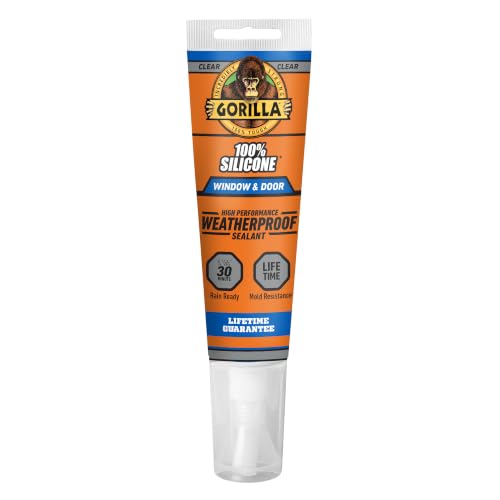
- ✓ Easy bead control
- ✓ Very flexible
- ✓ Water-ready quickly
- ✕ Slightly pricey
- ✕ Clear finish shows seams
| Sealant Type | 100% silicone caulk |
| Color/Finish | Clear |
| Total Volume | 2.8 oz (approximately 79.4 g) |
| Indoor/Outdoor Use | Suitable for interior and exterior applications |
| Water Exposure Rating | 100% waterproof seal; water-ready after 30 minutes at 3/16 inch bead, 70°F (21°C), 50% humidity |
| Temperature/Weather Durability | Designed to withstand sun, rain, and temperature fluctuations; remains flexible and resists shrinking/cracking over time |
You know those quick caulk touches you only notice when the sun hits a sill just right? This Gorilla 100% Silicone Window & Door Sealant feels immediately different from the moment you snip the nozzle and press it along a gap you’ve been avoiding for weeks.
The bead comes out smooth with a 45-degree cut, and you’ll hear that clean seal click into place instead of fighting a brittle line.
In practice, it’s one of the easiest sealants to actually apply. It doesn’t drag or shrink as it cures, so you’re not reworking the same spot again tomorrow.
It’s flexible enough to handle seasonal shifts without cracking, which is exactly what you want around window frames and exterior gaps.
Touch-ups go fast, too. You can refresh aged lines around frames or vents without a messy cleanup afterward.
The 30-minute water readiness is a nice safeguard when you’ve got outdoor projects on a schedule, especially if a little rain sneaks in earlier than planned.
The clear finish helps it blend with most trims and siding, so you don’t end up with a bulky, visible line. And yes, it’s truly waterproof, so you don’t worry about leaks during a heavy rain or a hot summer day.
If you’re sealing a sink area or a splashy kitchen window, you’ll appreciate how it remains stable without shrinking over time. It feels like a confident, durable option you can trust for both touch-ups and full sealing jobs.
Overall, this Gorilla sealant earns its keep with ease of application, quick water-ready treatment, and lasting flexibility. It’s worth keeping on hand for seasonal maintenance or larger exterior projects alike.
Dap 18128 Alex Plus Acrylic Latex Caulk Plus Silicone 5.5 oz

| Material Type | Siliconized acrylic |
| Volume | 5.5 oz (156 g) tube |
| Color | White |
| Curing / Set Time | Paintable in 30 minutes; water-ready in 24 hours |
| Surface Adhesion / Use | Multi-surface adhesion suitable for interior and exterior applications; waterproof seal |
| Odor / Clean-up | Low odor; cleans up with water |
You squeeze the Alex Plus into the gap under my sink, and the first thing I notice is how smooth the squeeze is—it doesn’t fight back, it glides. The white bead neatens up against the porcelain and the drain, and I’m pleasantly surprised by how fast it levels without leaving a shine.
I the past few days used it on a few edges around the basin where water tends to creep. It dried to a matte finish that paints over cleanly in 30 minutes, which means I didn’t have to stall the project for hours.
The silicone in the formula keeps it flexible, so it doesn’t crack when the cabinet doors slam or the pipes expand a little with temperature shifts.
Handling is forgiving: a quick wipe with a damp cloth takes away any stray lines, and cleanup with water is genuinely effortless. It’s not overly heavy or sticky, so work sessions stay tidy and you don’t feel stuck with a gummy mess.
The odor is low, which is a small but real win when you’re sealing a kitchen area that’s easy to breathe in during a quick improv fix.
What I like most is the paintability. You can match the caulk to the surrounding wall or trim without fear of peeling later, and the surface won’t discolor the paint underneath.
It clings well to both ceramic and painted surfaces, giving a confident waterproof seal that lasts through daily use.
Overall, this Alex Plus sticks to the practical: fast cure time, easy cleanup, and a finish that looks clean and professional. If you’re tackling a sink area where moisture and paint aesthetics matter, this one makes the job feel straightforward rather than fiddly.
What Are the Key Features to Consider in Caulk for Sinks?
When selecting the best caulk to hold a sink, several key features should be considered to ensure durability and effectiveness.
- Water Resistance: The caulk should be able to withstand exposure to moisture without breaking down or losing adhesion. Water-resistant caulk is essential in areas like sink perimeters where water exposure is frequent, preventing mold and mildew growth.
- Adhesion Strength: A strong adhesive property is crucial for caulk to securely bond the sink to the countertop or wall. High-quality caulk will provide a long-lasting hold, reducing the risk of leaks and ensuring the sink remains stable over time.
- Flexibility: The caulk should maintain flexibility after curing, allowing it to expand and contract with temperature changes or sink movement. This flexibility prevents cracking or separation from the surfaces, which can lead to water damage.
- Mold and Mildew Resistance: Choosing caulk that has additives to resist mold and mildew is important in maintaining hygiene and appearance. This feature helps to keep the caulk looking fresh and clean, especially in damp environments where these fungi can thrive.
- Ease of Application: The caulk should be easy to apply, whether it comes in a tube for caulking guns or as a squeeze tube. An easy application process can save time and effort, ensuring a neat and professional finish.
- Paintability: If the sink area is to be painted, selecting caulk that can be painted over will allow for better aesthetic integration with the surrounding decor. This feature is particularly useful for achieving a seamless look in kitchens or bathrooms.
- Drying Time: The drying or curing time of the caulk is important to consider, as some products may require longer periods before they can be exposed to water. Quick-drying options are beneficial for faster project completion, while longer curing times may be necessary for certain high-performance products.
What Types of Caulk Are Most Effective for Securing a Sink?
The best types of caulk to hold a sink securely include:
- Silicone Caulk: Silicone caulk is highly flexible and waterproof, making it ideal for areas exposed to moisture, such as around sinks. It adheres well to a variety of materials including porcelain, metal, and plastic, ensuring a strong seal that can withstand temperature fluctuations.
- Polyurethane Caulk: Known for its durability and strong adhesion, polyurethane caulk is perfect for securing sinks as it can bond to both porous and non-porous surfaces. It also offers excellent resistance to water and chemicals, making it suitable for kitchen and bathroom applications.
- Acrylic Latex Caulk: While not as waterproof as silicone, acrylic latex caulk is easy to apply and paintable, making it a good choice for areas around a sink that may require touch-ups. It provides a decent seal against moisture and is more flexible than traditional caulks, although it may not hold up as well in high-humidity environments.
- Hybrid Caulk: Combining features of silicone and polyurethane, hybrid caulks provide a strong bond and excellent moisture resistance. They are versatile and can be used on various surfaces, making them a great choice for securing sinks while offering ease of application and cleanup.
How Does Silicone Caulk Compare to Acrylic Caulk for Sinks?
| Feature | Silicone Caulk | Acrylic Caulk |
|---|---|---|
| Material Type | Flexible and waterproof, ideal for sinks and wet areas. | Water-based, paintable, but less flexible than silicone. |
| Durability | Highly durable, resistant to mold and mildew. | Less durable, can shrink and crack over time. |
| Ease of Application | Requires careful application; cures slowly but forms a strong bond. | Easy to apply, cleans up with water, dries faster. |
| Price | Generally more expensive due to its performance and longevity. | Affordable option but may need frequent reapplication. |
| Curing Time | Typically 24 hours to fully cure. | Dries to the touch in 30 minutes, fully cures in 1-2 weeks. |
| Ideal Uses | Best for sinks, showers, and areas exposed to water. | Good for indoor applications and areas needing paintable surfaces. |
| Temperature Resistance | Withstands extreme temperatures, suitable for both high and low conditions. | Less tolerant of extreme temperatures, best for moderate conditions. |
| Longevity | Lasts up to 20 years indoors and outdoors with proper application. | Typically lasts 5-10 years, may degrade faster outdoors. |
Why Is Polyurethane Caulk Recommended for Certain Environments?
Polyurethane caulk is recommended for certain environments because of its exceptional adhesion, flexibility, and resistance to moisture and temperature changes, making it ideal for applications around sinks where water exposure is frequent.
According to a study published by the American Society for Testing and Materials (ASTM), polyurethane sealants exhibit superior bonding strength and can withstand significant movement without cracking, which is critical in areas subject to both water and mechanical stress (ASTM C920). This makes polyurethane caulk particularly effective in maintaining a watertight seal around sinks, where fluctuations in temperature and humidity can occur.
The underlying mechanism of polyurethane’s effectiveness lies in its chemical composition, which allows it to form durable, elastic bonds with various substrates, including wood, metal, and ceramics. This elasticity helps accommodate the expansion and contraction of materials due to temperature changes or physical pressure, thereby reducing the risk of gaps that could lead to leaks. Furthermore, polyurethane’s resistance to mold and mildew growth, as highlighted by the Centers for Disease Control and Prevention (CDC), ensures that caulking around sinks remains intact and hygienic over time, making it a preferred choice in both residential and commercial settings.
What Advantages Does Silicone Caulk Offer for Bathroom and Kitchen Sinks?
Silicone caulk presents several advantages for securing sinks in both bathrooms and kitchens, making it a preferred choice among homeowners and professionals alike. Its unique properties contribute to durability and effectiveness in areas prone to moisture.
-
Water Resistance: Silicone caulk is highly water-resistant, preventing leaks and moisture from seeping into countertops and cabinets. This quality is crucial in maintaining the integrity of sink installations.
-
Flexibility and Adhesion: Unlike other types of caulk, silicone remains flexible over time, allowing it to accommodate movements caused by temperature fluctuations without cracking or losing adhesion. This flexibility ensures a long-lasting seal around sinks.
-
Mold and Mildew Resistance: Many silicone caulks are formulated to resist mold and mildew, making them suitable for wet environments. This feature helps maintain a clean and hygienic appearance around sinks.
-
Ease of Application: Silicone caulk is easy to apply with a caulking gun, allowing for precise placement and a neat finish. Its ability to cure quickly also minimizes downtime during installations.
-
Variety of Colors: Available in various colors, silicone caulk can match or complement sink and countertop finishes, enhancing the overall aesthetic appeal of both kitchens and bathrooms.
These characteristics underscore silicone caulk’s suitability as the best option for securing sinks effectively.
How Can You Properly Apply Caulk for Maximum Adhesion When Installing a Sink?
To properly apply caulk for maximum adhesion when installing a sink, consider the following steps:
- Choose the Right Caulk: Selecting a high-quality caulk specifically designed for sinks, such as silicone or a silicone-latex blend, ensures strong adhesion and durability. These types of caulk are resistant to water and mold, making them ideal for wet areas.
- Clean the Surface: Thoroughly clean both the sink and the countertop or wall area where the caulk will be applied to remove any dust, grease, or old caulk. A clean surface promotes better adhesion and helps the caulk to form a watertight seal.
- Use a Caulking Gun: Load the caulk into a caulking gun for precise application. The gun allows for controlled pressure and helps to apply a consistent bead of caulk along the joint, reducing the chances of uneven application.
- Apply the Caulk: Hold the caulking gun at a 45-degree angle and apply a steady, continuous bead of caulk along the joint where the sink meets the countertop. Ensure that the bead is uniform and fills the gap completely to prevent water from seeping underneath.
- Smooth the Caulk: After applying, use a caulk smoothing tool or your finger dipped in water to smooth the caulk bead. This not only improves the appearance but also helps to push the caulk into the joint for better adhesion.
- Allow Proper Curing Time: Follow the manufacturer’s instructions regarding the curing time of the caulk before using the sink. Proper curing is essential for achieving maximum adhesion and ensuring the longevity of the seal.
What Common Mistakes Should You Avoid When Caulking a Sink?
When caulking a sink, avoiding certain common mistakes can ensure a better seal and longevity of the caulking job.
- Not Cleaning the Surface Properly: Failing to thoroughly clean the area where the caulk will be applied can lead to poor adhesion. Grease, soap residue, or old caulk can prevent the new caulk from sticking effectively, resulting in leaks and the need for frequent reapplication.
- Choosing the Wrong Type of Caulk: Using an unsuitable type of caulk can compromise the integrity of the seal. For sinks, it’s essential to select a caulk that is specifically designed for kitchen or bathroom use, as these are formulated to resist moisture and mold.
- Applying Caulk in the Wrong Conditions: Temperature and humidity can significantly affect the performance of caulk. It’s best to apply caulk in dry conditions and when temperatures are within the recommended range specified by the manufacturer to ensure optimal adhesion and curing.
- Using Too Much or Too Little Caulk: Over-applying caulk can create a messy appearance and may not cure properly, while under-applying can leave gaps that allow water to seep through. A steady, even bead should be applied, allowing for enough material to fill the joint without excess overflow.
- Neglecting to Smooth the Caulk: Failing to smooth out the caulk after application can result in a rough finish that is not only unattractive but can also trap dirt and moisture. Smoothing the caulk with a finger or a caulking tool ensures a clean and professional-looking seal.
- Not Allowing Proper Cure Time: Rushing the process by using the sink before the caulk has fully cured can lead to a compromised seal. It’s important to follow the manufacturer’s instructions regarding cure time to ensure the caulk sets properly and prevents future leaks.