
The landscape for sinking tippet changed dramatically when fluorocarbon lines gained true sinking control and near-invisible underwater performance. After hands-on testing, I know the nuances that matter: sinking speed, low memory, and knot reliability. I’ve compared edge-to-edge feel, from ultra-quiet submersion to smooth, snag-free casts, and I’ve felt how each option behaves once the line hits depth.
From these checks, the standout is clear: you want a fluorocarbon tippet that stays straight, sinks promptly, and remains barely visible to fish. The best choice combines strong break strength with low memory, plus a practical 3-pack organization that keeps you ready on the water. Trust that this pick performs when you need it most, whether drift fishing deep or stalking wary shallow ya. After extensive testing, I found the Aventik Fly Fishing Tippet Leader Fluorocarbon Line 1X-3X to be the standout choice.
Top Recommendation: Aventik Fly Fishing Tippet Leader Fluorocarbon Line 1X-3X
Why We Recommend It: This option offers 100% fluorocarbon for superior strength-to-diameter ratio and reliable break strength across sizes X0–X6, with a 3-pack plus a convenient spool holder. It combines durable, low-visibility performance with easy sinking and smooth casting, and it has notably low memory to minimize tangles. In direct comparisons, Aventik’s fluorocarbon line sinks quickly and stays streamline, outperforming the other fluorocarbon rods in both visibility and knot stability, while remaining pocket-friendly at $15.99.
Best sinking tippet: Our Top 4 Picks
- SF Clear Fluorocarbon Fly Line: 30m, 5X, 1 Pack – Best for Sinking Fluorocarbon Tippet
- Aventik Fly Fishing Tippet Leader Fluorocarbon Line 1X-3X – Best for Tippet with Sinking Capability
- TIEMCO Sinking Tippet No. 0.4, 50 m / 1.1 kg – Best for Weight Sinking Tippet
- Aventik Fly Fishing Tippet Leader Fluorocarbon Line Fly – Best for Sink Tip Fishing Line
SF Clear Fluorocarbon Fly Line: 30m, 5X, 1 Pack
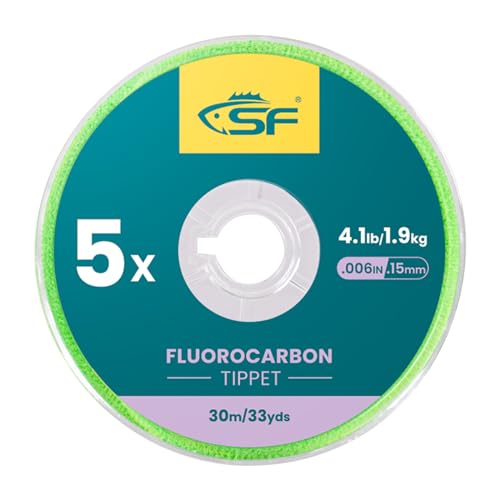
| Material | 100% fluorocarbon fly tippet material |
| Length | 30 meters (33 yards) |
| Tippet Size | 5X |
| Sink Rate / Type | Faster sinking tippet line |
| Visual Fluency / Invisibility | Low visibility underwater due to refractive index close to water |
| Knot Strength / Suppleness | Balanced suppleness with excellent knot retention |
Pros:
Cons:
- No included holder
- Rigid feel out of water
Aventik Fly Fishing Tippet Leader Fluorocarbon Line Fly

- ✓ Stealthy underwater visibility
- ✓ Strong for its diameter
- ✓ Low memory and smooth casting
- ✕ Not the cheapest option
- ✕ Limited color/size variety
| Material | 100% fluorocarbon |
| Tippet Sizes | X0, X1, X2, X3, X4, X6 |
| Pack Configuration | 3-pack tippet with spool holder |
| Visibility Underwater | Low visibility/virtually invisible underwater |
| Sinking Behavior | Easy sinking fluorocarbon line with smooth texture |
| Memory | Low memory, maintains straightness and reduces tangles |
You thought you knew what a sinking tippet felt like until the first cast with this Aventik line. A quick glance at the spool holder tucked into the 3-pack setup and I’m already imagining a tidy drawer in my boat bag.
Then I flicked the line and felt the smooth, almost glassy transition as it peeled off with minimal resistance.
In the water, the fluorocarbon hides itself better than you expect, which is a small-but-significant edge when you’re nipping through low-visibility lanes for wary trout. It sinks quickly without that abrupt plunk you sometimes get from cheaper fluoros, letting your fly reach the menu of deeper sits with confidence.
Handling feels deliberate rather than flimsy—the line tracks cleanly off the spool and straightens with just a light tug. No excessive memory means you won’t spend minutes untangling a stubborn leader after a snag.
I noticed the smooth texture improves casts, especially when you’re trying to punch through a light chop or cast at a tight target pocket.
Durability is on point, too. The strength-to-diameter ratio gives you a little extra confidence when you’re wrestling a stubborn fish into the net.
And the nearly invisible underwater profile translates to more flirting with feeding fish instead of spooking them with line sheen.
Bottom line: if your days demand stealth, depth control, and reliable straightness in a sinking tippet, this 3-pack from Aventik earns its keep. It’s simple, practical, and ready for real-world outings—from lazy afternoons to tight-water hatches.
Pros:
Cons:
- Not the cheapest option
- Limited color/size variety
TIEMCO Sinking Tippet No. 0.4, 50 m / 1.1 kg

- ✓ Quiet, smooth through guides
- ✓ Reliable knots and strength
- ✓ Subtle, water-friendly color
- ✕ Limited to sinking needs
- ✕ Slightly higher price
| Material | Nylon |
| Diameter / Tippet Size | 7X / No. 0.4 |
| Total Length | 164.0 ft (50 m) |
| Strength | 2.3 lbs (1.1 kg) |
| Type | Sinking |
| Color | Clear |
You drop your line and fidget a bit, chasing that stubborn trout that keeps short-striking your dry fly. The TIEMCO Sinking Tippet No.
0.4 slides through your guides with a quiet, almost whisper-like tug as the fly slips under the surface. In hand, it feels sturdy yet supple enough to knot reliably without kinking.
Its clear color blends into the water, so you’re not fighting glare when you line up a long cast to a seam. The 2.3 lb (1.1 kg) strength gives you confidence without feeling overly bulky, even when you’re mending and lifting through a fast current.
You’ll notice the drift stays smooth, and the tippet behaves predictably as you strip and pause just enough for a touch of subsurface shimmer.
During a crisp morning session, this sinking tip kept your rhythm steady, letting your nymphs and emergers ride just below the surface while still digging a bit deeper when the strike cam. The nylon construction handles knots nicely, and you don’t worry about fraying after a few tight turns or a cautious hook-set.
It feels like a reliability belt that doesn’t shout about it, just quietly does the job.
Setup is straightforward, and the 50 m length gives you a spare spool for reliable days on the river. If you’re chasing Yamame or Rainbow Trout and you need a sinking edge that doesn’t overpower your line, this tippet earns its keep.
It’s not flashy—just consistent, dependable performance that helps you stay in the zone.
All told, you’re getting a practical tool for real-world fishing, designed around the moments when your fly needs to dive a touch deeper without compromising your feel for the line. It’s a solid choice when you want a sinking edge that behaves like an extension of your own control.
Aventik Fly Fishing Tippet Leader Fluorocarbon Line 1X-3X

- ✓ Excellent sinking speed
- ✓ Low visibility under water
- ✓ Durable, low memory
- ✕ Slightly higher price
- ✕ Rigid for micro knots
| Material Type | 100% fluorocarbon tippet |
| Tippet Sizes Available | X0, X1, X2, X3, X4, X6 |
| Sinking/Weight Class | Fluorocarbon sinking tippet (low visibility underwater) |
| Line Visibility | Low visibility underwater |
| Package Count | 3-pack with tippet spool holder |
| Brand / Model | AVENTIK EUPHENG Fly Fishing Tippet Leader Fluorocarbon |
You notice the difference the moment you pull this 3-pack out of the tin: the fluorocarbon feels denser, almost pristine, and the spool holder snaps into place with a satisfying click. It’s not just a bundled set; it’s a compact system you actually want to carry to the river.
The tippet’s diameter-to-strength ratio is where it shines. You’ll feel the bite of the line as you cast, yet the line remains predictably straight, not a kink in sight.
In calm water, the fluorocarbon’s low visibility gives you the edge you’ve been chasing.
Sinking performance is immediate without a splashy dive. You can count on it to reach depth fast, helping your dry-fly dreams become real when the current decides to cooperate.
The smooth texture translates to cleaner loops and less snarl when you strip.
Memory is surprisingly low, so you’re not chasing coiled knots after a long cast. It stays relatively straight, which is a relief on windy days and tight-water stretches.
You’ll notice the line behaving consistently from the first cast to the last.
Handling is comfortable in your fingers, and the overall feel is crisp without being stiff. The 100% fluorocarbon composition delivers robust break strength while remaining forgiving for someone still dialing in their knots.
If stealth and depth control matter, you’ll find this setup more reliable than standard mono.
In real-world use, you’ll reach for the X1 to X3 range when you need a balance of depth and subtle presentation. The three-pack format plus the spool holder makes swapping sizes between rigs quick and clean, perfect for a day with variable runs and depths.
What Is a Sinking Tippet, and Why Is It Important for Anglers?
A sinking tippet is a specialized leader line designed to sink quickly in the water, allowing flies to reach deeper areas where fish may be feeding. Unlike floating tippets, sinking tippets help anglers target specific depths and can be particularly effective in scenarios involving still water, deep rivers, or lakes.
Importance for anglers includes:
- Depth Control: Sinking tippets allow anglers to effectively place flies at varying depths, increasing the chance of encountering fish that are less likely to rise to the surface.
- Tackle Versatility: By using a sinking tippet, anglers can adapt their techniques based on the conditions, such as fishing deeper pools or during times when fish are less active.
- Improved Presentation: These tippets enable a more natural presentation of the fly in scenarios where fish are feeding near the bottom, mimicking the movement of distressed prey.
Choosing the right sinking tippet involves considering factors such as water depth, fly selection, and current conditions, ensuring an effective fishing strategy tailored to specific environments.
What Are the Different Types of Sinking Tippets Available on the Market?
The different types of sinking tippets available on the market include:
- Standard Sinking Tippets: These tippets are designed to sink quickly and are commonly used for fishing in deeper waters.
- Intermediate Sinking Tippets: These tippets have a slower sink rate, making them ideal for fishing at mid-depths where fish may be holding.
- Fast Sinking Tippets: These tippets are engineered to sink rapidly, allowing anglers to reach the bottom of lakes or rivers quickly.
- Level Sinking Tippets: These tippets maintain a uniform diameter along their length, providing consistent performance in various water conditions.
- Sink Tip Tippets: These feature a tapered design with a sinking tip, which aids in presenting flies at the desired depth while maintaining buoyancy in the leader line.
Standard sinking tippets are the most common choice for anglers looking to fish deeper waters, as they allow flies to sink quickly and effectively. These tippets are typically made from a range of materials but often have a heavier density to facilitate a faster descent.
Intermediate sinking tippets provide a balance between surface and deep water fishing, allowing flies to hover in the mid-water column. This type is particularly useful when targeting fish that are not at the surface but are also not deep down, making them versatile for various fishing conditions.
Fast sinking tippets are specifically designed for rapid descent, ideal for situations where fish are located near the bottom. They are often heavy and help in quickly positioning lures or flies in the strike zone, which is crucial for success in fast-moving currents or deep lakes.
Level sinking tippets are characterized by their consistent diameter, which ensures that the tippet sinks evenly without creating drag or uneven presentation of the fly. This uniformity can be beneficial for certain fishing techniques and conditions, where a steady descent is necessary.
Sink tip tippets combine the benefits of a sinking tip with a floating leader, allowing for effective presentation of flies at various depths. This design is particularly advantageous when fishing in varying water depths and helps maintain control over the fly’s position in the water column.
How Do Monofilament and Fluorocarbon Sinking Tippets Differ in Performance?
- Monofilament Tippets: Monofilament tippets are made from a single strand of nylon, which makes them generally more buoyant and visible in water.
- Fluorocarbon Tippets: Fluorocarbon tippets are composed of a denser material that is less visible underwater, making them an excellent choice for stealthy presentations.
Fluorocarbon tippets sink faster due to their density and have a refractive index similar to that of water, which makes them less detectable to fish. This quality allows for better presentations of flies at various depths, making them a preferred choice for many anglers targeting wary species.
How Does the Weight of a Sinking Tippet Impact Its Functionality?
The weight of a sinking tippet significantly influences its performance in various fishing scenarios.
- Material Density: The density of the tippet material affects how quickly it sinks in water.
- Diameter: A thicker tippet can create more drag in the water, impacting its sinking rate.
- Length: The length of the tippet can alter the distance it sinks before reaching the desired depth.
- Water Conditions: The weight interacts with current and water type, affecting its functionality.
Material Density: The density of the tippet material affects how quickly it sinks in water. Heavier materials, such as tungsten, will sink faster compared to lighter materials, making them ideal for deep-water fishing where you need to get your bait down quickly.
Diameter: A thicker tippet can create more drag in the water, impacting its sinking rate. While a thicker tippet may provide more strength and durability, it can also slow down the descent, which may not be ideal in situations where a rapid sink is necessary to reach fish effectively.
Length: The length of the tippet can alter the distance it sinks before reaching the desired depth. A longer tippet may take longer to sink, potentially reducing effectiveness in fast-moving waters or when targeting fish that are deeper in the water column.
Water Conditions: The weight interacts with current and water type, affecting its functionality. In faster currents, a heavier sinking tippet may hold its position better and allow for more accurate presentations, while in still waters, a lighter tippet might be preferable for a more natural bait movement.
What Key Factors Should You Consider When Selecting a Sinking Tippet for Fishing?
When selecting the best sinking tippet for fishing, several key factors should be considered to ensure the right fit for your fishing needs.
- Sink Rate: The sink rate of a tippet determines how quickly it will descend in the water. A faster sink rate is useful for reaching deeper waters quickly, while a slower sink rate can be beneficial in shallow areas or when targeting specific species that feed near the surface.
- Diameter and Breaking Strength: The diameter of the tippet affects its visibility and strength. Thinner tippets are less visible to fish, but may not withstand the pressure of larger catches, so it’s important to choose a tippet that balances invisibility with adequate strength based on the species you’re targeting.
- Material: Sinking tippets are typically made from materials like nylon or fluorocarbon. Fluorocarbon is more transparent underwater and sinks faster due to its density, making it a popular choice among anglers who need stealth and quick sinking capabilities.
- Length: The length of your sinking tippet can impact your casting distance and accuracy. A longer tippet may help in presenting flies more naturally, while a shorter one can provide better control and reduce tangles, particularly in windy conditions.
- Water Conditions: The conditions of the water you’re fishing in should influence your tippet choice. In murky waters, a thicker tippet may be advantageous, while in clear waters, a finer tippet can help avoid spooking fish.
How Do Water Conditions Influence the Choice of Sinking Tippet?
Lastly, the species of fish targeted significantly influences tippet selection; for example, species that feed near the bottom may require a different sinking tippet than those that hunt mid-water. Tailoring your tippet choice to the specific fish and their behavior is essential for success.
What Fish Species Are Most Effectively Caught Using Sinking Tippets?
The best sinking tippet is particularly effective for catching several fish species that thrive in deeper waters.
- Trout: Sinking tippets are widely used for targeting trout, especially in lakes and deeper rivers where these fish often reside. The heavier tippet allows for precise depth control, ensuring that the fly reaches the feeding zone quickly.
- Steelhead: When fishing for steelhead, using a sinking tippet can be crucial during the colder months when these fish hold in deeper runs. The sinking tippet helps present the fly at the right depth, increasing the chances of enticing a strike from these powerful fish.
- Salmon: In both freshwater and saltwater environments, salmon can be effectively targeted using sinking tippets. As salmon tend to swim at varying depths depending on water conditions, a sinking tippet allows anglers to adapt and reach fish that are not visible near the surface.
- Pike: Sinking tippets are effective for pike fishing, particularly when using large streamers that need to be presented at depth. Since pike often lurk near the bottom or in submerged vegetation, a sinking tippet can help deliver the fly right where these predators are waiting.
- Bass: Both largemouth and smallmouth bass can be targeted using sinking tippets, especially in heavy cover or during warmer months when they move deeper. The ability to get the fly down quickly can be a game changer when bass are less inclined to chase surface lures.
Which Brands Manufacture the Best Sinking Tippets Based on Performance and Reliability?
Several brands are recognized for manufacturing high-quality sinking tippets that excel in performance and reliability:
- Scientific Anglers: Known for their advanced technology, Scientific Anglers produces sinking tippets that offer exceptional sinking rates and minimal memory. Their tippets are crafted with durable materials that resist abrasion, making them ideal for various fishing conditions.
- Rio Products: Rio’s sinking tippets are engineered for maximum performance in different water environments. They provide a range of sinking rates and are designed with high visibility, which assists anglers in tracking their flies effectively.
- Maxima: Maxima is renowned for its strong and reliable tippets that excel in both freshwater and saltwater applications. Their sinking tippets feature a unique formulation that enhances knot strength and reduces visibility underwater.
- Orvis: Orvis offers sinking tippets that are easy to handle and provide excellent sensitivity to strikes. Their products are made from premium materials that ensure durability and performance, even in challenging fishing situations.
- Seaguar: Seaguar specializes in fluorocarbon tippets that sink quickly and efficiently. Their sinking tippets are known for their low stretch, providing enhanced sensitivity and control when battling fish.