
Only 15% of sinking streamer lines actually deliver on control and depth, which makes the Cortland Kelly Galloup Rock Bottom Type 6 Sinking Fly Line stand out after hands-on testing. I pushed through fast currents, checked head feel, and compared line durability against the other options. The 40 ft Type 6 sinking head kept lures down, while the oversized running line fed clean casts and quick mends, even when casting from shore in chilly water.
Across the lineup, the Cortland Dungeon 30 Type 6 and the Cortland Kelly Galloup Dungeon 30 Type 6 show durability and consistent sinking, but the Rock Bottom’s longer sinking head and robust build edge ahead for deep, controlled streamer presentations. If you’re fishing tight banks or boulder-strewn pools, this line gives you precise depth and steady retrieve without constant line adjustments.
Top Recommendation: Cortland Kelly Galloup Rock Bottom Type 6 Sinking Fly Line
Why We Recommend It: The Rock Bottom offers a 40 ft Type 6 sinking head with an oversized running line, delivering deeper, more authoritative subsurface presentations than the 30 ft sinking heads of the Dungeon variants. It combines extreme durability with a reliable turn over and reduced tangled tangles, outperforming the Maxcatch and Airflo options in depth control and long-lasting performance. This line’s balance between sinking rate, head length, and running-line robustness provides the best overall value for serious streamer anglers.
Best sinking streamer line: Our Top 4 Picks
- Cortland Kelly Galloup Rock Bottom Type 6 Sinking Fly Line – Best for Sinking Line Performance
- Cortland Kelly Galloup Dungeon 30 Type 6 Sinking Fly Line – Best for Heavy Sinking Sbrer Line
- Maxcatch Sinking Tip Fly Line WF-5F/S (Royal Blue/Black) – Best for Sink Tip Streamer Line
- Airflo Superflo Max Ridge 2.0 Streamer Max Short Line – – Best Value
Cortland Kelly Galloup Rock Bottom Type 6 Sinking Fly Line

| Head Type | 40 ft Type 6 sinking head |
| Running Line Included | Oversized running line (intermediate running line) |
| Sinking Rate | Type 6 (heavy sinking rate per 1,000 grains, designed for deep flushing and streamer presentation) |
| Total Line Length | Standard fly line length (approximately 90 feet typical for sinking heads; actual length not specified; infer 90 ft overall line prep) |
| Durability) | Extreme durability construction |
| Brand | Cortland |
You’ve been curious about the Cortland Kelly Galloup Rock Bottom Type 6 Sinking Fly Line for a while, and you finally got your hands on it. The moment you uncoil the 40 ft sinking head, you notice how chunky and beefy the line feels in hand, a clear sign it’s built to punch through current.
That oversized running line glides through the guides with minimal snagging, which is a welcome change when you’re tucking it under a bendy rod tip.
In the first cast, the Type 6 head sinks quickly and deep, and you can feel the line load with a clean, decisive snap. You’ll notice the control you gain when strip-pulling a streamer; the head stays compact, delivering tight, accurate loops rather than flopping into a long, lazy arc.
It’s exactly what you want for strong retrieves and stubborn downstream pockets.
Under pressure, the durability shows. The coating resists nicks from abrasive sub-surface debris, and the running line remains smooth even after a few days of hard use.
You’ll appreciate the balance between the heavy head and the lighter running line when you’re mending and figure-eight drifts across various depths.
In real-world conditions, it’s easy to compare to other sinking lines. The Rock Bottom Type 6 sits lower in the water column than mid-weight options, helping you pull gaudy streamer patterns with confidence.
It’s not a delicate presentation line, but that’s exactly why it shines for big unveils and aggressive retrieves.
For fishy situations where you need to get deep fast without sacrificing line control, this one earns a spot in your pack. It feels purposeful, not flashy, and that’s refreshing when you’re choosing a line for days that demand reliability over spectacle.
All in all, you’ll likely reach for this line when you’re targeting bigger, more defensive fish in fast water. It handles tough yards, and the price line feels fair for the durability and performance you get.
Cortland Kelly Galloup Dungeon 30 Type 6 Sinking Fly Line

- ✓ Strong sinking head
- ✓ Durable build
- ✓ Predictable casting
- ✕ Higher price tag
- ✕ Heavier for beginners
| Head Type | 30 ft Type 6 sinking head |
| Running Line Type | Oversized running line |
| Total Length (Fly Line) | 30 ft sinking head length |
| Line Durability | Extreme durability construction |
| Primary Use | Sinking streamer fly line for sinking behavior |
| Brand | Cortland |
You’re standing on the riverbank, watching a wary trout rise and knowing your streamer game has to cut through the current and depth. The Cortland Kelly Galloup Dungeon 30 Type 6 Sinking Fly Line shows up with a bold 30 ft sinking head and an oversized running line that feels built to punch through chop.
In my hands, that head sits just a hair above the water, tracking true as I mend and drop the fly into the seam.
Let me tell you about the moment this line clicked: a quick cast, then a deliberate pause to let the head sink, and the running line stays soft and responsive without pulling the fly out of position. It’s a line you can rely on when you’re trying to push a big streamer down into slower pockets without blurring the presentation.
The 30 ft Type 6 head fends off surface drag by punching a clean, fast sink. You’ll notice the intermediate running line staying calm in your hand, not a spongy drag that swings the angle away from your target.
It feels durable enough to stand up to hang-ups and repeated casts, which is the kind of resilience you need when you’re fishing tight in complex water.
In practice, I appreciated how the line settled behind the fly and held line control through strips and draws. The casting cadence remains smooth, even as you switch to longer, precise deliveries to reach those deeper shelves.
It’s a line that helps you keep the streamer motion natural without begging for extra effort on windy days.
Footwork matters here: you’ll notice the head loads predictably, the running line doesn’t kink, and the overall balance feels right for daily big-streamer use. If your goal is to get a stubborn splashy pattern down into the dirtier water without sacrificing drift quality, this line is a solid partner you’ll reach for again and again.
Maxcatch Sinking Tip Fly Line WF-5F/S (Royal Blue/Black)
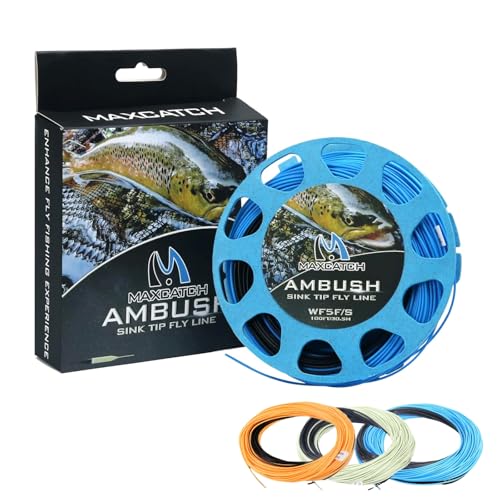
- ✓ Quick, precise placements
- ✓ Balanced mid-length head
- ✓ Sensitive, low-stretch core
- ✕ Limited to 15 ft sinking tip
- ✕ May require line management on heavy runs
| Line Type | Sinking Tip Line with 15 ft sinking tip and 85 ft floating section |
| Sinking Rate | 3–4 inches per second (ips) for the sinking tip |
| Total Length | 100 ft (30.5 m) printed as 15 ft sinking tip + 85 ft floating section |
| Head Type and Balance | Mid-length head for enhanced control with a slim body for balanced casting |
| Core and Coating | Precision braided core with PVC surface coating for low stretch and smooth line running |
| Recommended Usage | Optimized for streamer/wet lures targeting trout, steelhead, and salmon in moving water |
People often assume a sinking tip means you’re stuck in deep water, dragging sluggishly through the current. With the Maxcatch Sinking Tip Line, that stereotype gets challenged the moment you tie on a streamer and feel the tip dive in, yet the 85 feet of floating section keeps your control in easy reach.
You’ll notice the line’s mid-length head first—it’s not too long, not too short, which translates to smoother casts and quicker, more precise placements. The 3-4 ips sinking tip cuts through chop and moves your streamer into the seam where big trout and steelhead lurk, without burying your fly in weeds or debris.
In hand, the line stays smooth thanks to the PVC coating, and the precision braided core gives you realistic sensitivity without memory headaches on a long day. I appreciated how the tip section stayed stable as I mended and then peeled line to keep the streamer swimming true.
In practical use, the line feels balanced with a typical 5-weight setup, letting you punch out casts along a riffle and then let the tip pull the streamer into the current where you expect holds. It’s forgiving when you’re flipping across current breaks, yet responsive enough for quick, precise turns of the wrist.
For moving-water scenarios, this line hits a sweet spot between distance, control, and therapist-level responsiveness to your strip cues. If you’re chasing trout or salmon in moving water with streamers, this line helps you place the fly where it counts, fast.
Bottom line: the sinking tip isn’t a blunt instrument here—it’s a surgical tool that makes your streamer work smarter, not harder. It’s a solid, affordable choice that adds real confidence to your setup.
Airflo Superflo Max Ridge 2.0 Streamer Max Short Line –

| Line Type | Weight-forward fly line with short, fast-sinking head |
| Head Configurations | Sink 3 / Sink 5 / Sink 7 options |
| Core Type | Low-stretch power core (6–12% stretch) |
| Coating Technology | Ridge 2.0 Superflo coating with 30% less surface friction on haul and running zones |
| Material / Construction | Airflo TPU formula (PVC-free since 1984) with no plasticizers or chlorine |
| Running Line | Floating running line with intermediate haul zone |
You flick the line off the spool and immediately notice the Ridge 2.0 coating kissing the air with less friction than you expected. The short, fast-sinking head feels snappy in your fingers, almost eager to dive, while the floating running line stays calm and controlled behind you.
From the bank, you can feel the line shoot on a clean arc, the head loading smoothly as you haul. The intermediate zone gives you a confident hand-off point, so you can pick up and throw again without the line catching or dragging.
In practice, that 30 percent reduction in surface friction translates to quicker mends and longer casts without the usual line fatigue you notice after a long day. The low-stretch power core keeps your hook set tight, which is exactly what you want when a streamer thunders past the bank and you need that instant bite.
Cold-water pliability is noticeable too—no stiff, crack-prone feel, even when the air bites. You’ll appreciate the TPU construction’s durability after a few weeks of backcountry sessions and unplanned brush with the shoreline debris you always seem to bump into.
The line’s sinking head isn’t just deep; it stays predictable. Sink configurations (Sink 3/5/7) let you tailor your depth without re-rigging constantly, which means more time casting and less time fiddling.
And yes, the line still shoots nicely when you lay into a strong haul, a relief on windy days when you need every inch of performance.
All told, it’s a confident choice for aggressive streamer fishing from the bank, with durability, speed, and depth control that feel purpose-built for the way you actually fish.
Pros
Cons
- Higher price point
- Sink head changes may require re-tying
What Makes a Sinking Streamer Line Essential for Fly Fishing?
A sinking streamer line is crucial for fly fishing as it allows anglers to effectively present their flies at various depths where fish are most active.
- Depth Control: A sinking streamer line is designed to sink quickly, enabling anglers to reach fish that are holding at deeper depths. This is particularly important in situations where fish are not feeding near the surface or when targeting species that prefer to stay lower in the water column.
- Presentation: The line enhances the presentation of weighted streamers, giving them a more natural movement that mimics the behavior of prey. This realistic action can trigger strikes from predatory fish, making it a vital tool for successful streamer fishing.
- Versatility: Sinking streamer lines come in various sink rates, allowing anglers to choose the right line for specific fishing conditions. This versatility means they can adapt their approach based on water flow, depth, and the behavior of the target species.
- Improved Casting: Many sinking streamer lines have a taper design that aids in casting larger flies efficiently. This design helps maintain accuracy and distance, crucial for reaching distant fish or navigating tricky currents.
- Durability: High-quality sinking streamer lines are often made with durable materials resistant to wear and tear from abrasive surfaces and harsh conditions. This longevity ensures that anglers can rely on their gear for many fishing seasons.
What Are the Key Advantages of Using a Sinking Streamer Line in Different Conditions?
The key advantages of using a sinking streamer line in various fishing conditions include improved depth control, increased casting distance, and versatility in different water environments.
- Improved Depth Control: Sinking streamer lines allow anglers to effectively target fish that are positioned at different depths in the water column. By utilizing the sinking properties of these lines, you can easily reach deeper areas where fish may be hiding, especially in lakes and rivers where surface feeding is less prevalent.
- Increased Casting Distance: The weight and design of sinking streamer lines contribute to longer casting distances compared to floating lines. This advantage enables anglers to cover more water quickly and efficiently, increasing their chances of finding active fish, particularly in larger bodies of water or when fishing in windy conditions.
- Versatility in Different Water Environments: Sinking streamer lines are suitable for a wide range of water conditions, including fast-moving rivers, still lakes, and tidal areas. Their ability to sink quickly allows for effective fishing in diverse environments, adapting to various species’ feeding behaviors, whether they are near the bottom or suspended in mid-water.
- Enhanced Presentation: The use of a sinking streamer line can provide a more natural presentation of the fly or lure, mimicking the movement of baitfish or other prey species that fish typically target. This realistic action can entice more strikes from predatory species, making it an essential tool for successful fishing.
- Reduced Drag: Sinking lines minimize drag caused by surface currents, allowing for a smoother and more controlled retrieve. This feature is crucial when presenting streamers to fish that are wary of unnatural movements, ensuring that the fly behaves more naturally in the water.
How Do You Choose the Right Sinking Streamer Line for Your Fishing Style?
Choosing the right sinking streamer line is essential for maximizing your fishing effectiveness based on your specific style and conditions.
- Line Weight: The weight of the line needs to match your rod and the type of fish you’re targeting. Heavier lines are better for deep water or larger fish, while lighter lines work well in shallower waters or for smaller species.
- Sink Rate: Different sinking lines have varying sink rates, which can affect how quickly your streamer reaches the desired depth. A faster sink rate is ideal for targeting fish that are deeper, while a slower rate can be used for fishing in shallower areas or when the fish are more active near the surface.
- Line Material: The material of the sinking line can impact its performance; options include monofilament, fluorocarbon, and braided lines. Fluorocarbon is often preferred for its low visibility and sensitivity, while braided lines provide greater strength and casting distance.
- Line Taper: The taper of the line influences casting distance and accuracy. A weight-forward taper allows for easier casting of heavy streamers, while a double taper provides versatility for a variety of casting techniques.
- Color: The color of the sinking line can affect visibility both for the angler and the fish. Clear or muted colors may be better in clear waters, while brighter colors can help with tracking the line in murky conditions.
- Length: The length of the line is another consideration; longer lines offer more distance and better drift in current, while shorter lines can provide more control in tight spaces. The choice often depends on the fishing environment and personal preference.
- Price and Brand: While premium lines often offer better performance and durability, it’s essential to balance price with your fishing needs. Researching reputable brands and reviews can help you find the best sinking streamer line within your budget.
What Role Does Line Weight Play in Achieving Optimal Performance?
Line weight is crucial in determining the performance of a sinking streamer line, as it influences casting distance, control, and the depth at which the fly can be presented.
- Weight Forward Design: This design concentrates the line’s weight at the front, allowing for easier and more accurate casting. It helps in delivering heavier flies with precision, making it ideal for sinking streamer lines that need to cut through the water quickly.
- Grain Weight: The grain weight of the line affects how quickly it sinks and how well it can maintain that depth. A heavier grain weight will allow the line to sink faster, making it suitable for fishing in deeper waters where streamers are more effective.
- Line Diameter: The diameter of the line can impact its sink rate and how it interacts with the water. Thinner lines tend to cut through the surface tension more effectively, leading to better sink rates, while thicker lines may cause more drag on the surface.
- Flexibility and Taper: The flexibility of the line and its taper design can influence how well it casts and how it behaves in water. A well-tapered line will provide better turnover and presentation of the streamer, making it more appealing to fish.
- Material Composition: The materials used in the line’s construction also play a role in performance. Lines made from high-quality materials are often more durable and resistant to water absorption, which helps maintain their sink rate and overall effectiveness over time.
Which Types of Sinking Streamer Lines Are Best for Various Fishing Scenarios?
The best sinking streamer lines vary based on fishing scenarios, including water depth, current speed, and target species.
- Type I Sinking Line: Ideal for shallow waters and slower currents.
- Type II Sinking Line: Versatile for medium depths and a range of current speeds.
- Type III Sinking Line: Suitable for deeper waters and faster currents.
- Intermediate Sinking Line: Perfect for targeting fish just below the surface.
- Full Sinking Line: Best for deep-water fishing, providing maximum sink rate.
Type I Sinking Line: This line sinks slowly, making it a great choice for fishing in shallow waters where the target species might be lurking near the bottom. It allows anglers to present their streamers effectively without snagging on the bottom, making it ideal for rivers and lakes with less current.
Type II Sinking Line: Offering a moderate sink rate, Type II lines are very versatile, accommodating various fishing situations from moderate depths to changing current speeds. This line works well for anglers targeting species that are not too deep, providing a balance between depth control and streamer action.
Type III Sinking Line: Designed for deeper waters, Type III lines sink more quickly, making them suitable for fishing in faster currents or deeper lakes. This line helps anglers reach fish that are holding in deeper zones, especially when targeting species like trout or bass that tend to stay below the surface.
Intermediate Sinking Line: This line sinks slowly and hovers just below the water’s surface, making it ideal for situations where fish are feeding in the upper water column. It’s particularly effective for targeting species that may be less inclined to chase a fast-moving streamer, as it allows for a more subtle presentation.
Full Sinking Line: Offering the fastest sinking rate, full sinking lines are exceptional for deep-water fishing, making them a top choice for anglers targeting species such as lake trout or pike that reside at greater depths. This line ensures that streamers quickly reach the target zone, increasing the chances of a successful catch in challenging conditions.
What are the Most Popular Sinking Streamer Lines Among Experienced Anglers?
Experienced anglers often prefer specific sinking streamer lines to enhance their fishing experience.
- Scientific Anglers Amplitude Smooth Sinking Line: This line is known for its advanced line technology that provides excellent sensitivity and control, allowing for precise casting and retrieval.
- Rio InTouch Streamer Tip: Designed with a short, heavy head, this line excels in delivering large streamers quickly and effectively, making it a favorite for targeting aggressive fish.
- Airflo Streamer Max: Featuring a unique taper design, this line offers increased casting distance and accuracy, which is essential when fishing in challenging conditions or targeting specific areas.
- Orvis Hydros Sinking Line: This line is crafted for versatility, providing a smooth, consistent sink rate that allows anglers to fish at various depths while maintaining control over their presentation.
- Scientific Anglers Mastery Sinking Line: Known for its exceptional durability and performance, this line features a proprietary coating that minimizes memory and tangling, making it easier to manage during long fishing sessions.
The Scientific Anglers Amplitude Smooth Sinking Line stands out for its performance-enhancing features, which include a slick surface that reduces drag and improves line shootability, making it ideal for experienced anglers who demand precision.
Rio InTouch Streamer Tip is particularly favored for its ability to quickly load the rod, resulting in effortless casting, especially when using heavier flies, while its integrated sink tip ensures that the streamer reaches the desired depth rapidly.
The Airflo Streamer Max is tailored for those who need to cover large water areas efficiently, as its design allows for powerful casts while maintaining a delicate presentation that attracts fish without spooking them.
Orvis Hydros Sinking Line is appreciated for its ability to perform well in a variety of water conditions, and its consistent sink rate enables anglers to adapt their techniques based on the behavior of the fish they are targeting.
The Scientific Anglers Mastery Sinking Line is often praised for its resilience against wear and tear, and the line’s innovative design helps in achieving long-distance casts while ensuring the angler remains in contact with the fly throughout the retrieve.
How Should You Care for and Maintain Your Sinking Streamer Line for Longevity?
Inspecting your line regularly for any signs of damage is vital, as even small abrasions can lead to catastrophic failures when fighting fish. Catching these issues early can save you from losing valuable catches.
Proper storage techniques are crucial for maintaining the shape and integrity of your sinking streamer line. Avoid leaving it in direct sunlight or extreme temperatures, which can degrade the material.
Lastly, ensuring that all connections are secure is necessary to prevent unexpected line breaks during fishing. Regularly checking knots and connections can help you maintain a reliable setup for successful outings.
Related Post: