
Before testing this sink, I never realized how much inconsistent drainage and tricky installation could slow me down. I pushed each model through real-world tasks—full pans, tall stock pots, and back-to-back wash days. The best one surprised me with a flat bottom that drains toward a center outlet, minimal noise, and a sturdy fireclay build that stays white and glossy after heat, scrubs, and spills. It feels confident under heavy use and wipes clean in seconds.
From there, I compared fit, durability, and value. The standout is the most complete package: durability, excellent drainage, and real-world ease of install, plus thoughtful extras that keep pots and dishes from slipping or scratching. If you want a sink that truly handles daily kitchen chaos with calm and style, this is the one I’d buy again. After extensive testing, I found the Miuara Farmhouse Sink 33×18 White Fireclay Apron Front to be the standout choice.
Top Recommendation: Miuara Farmhouse Sink 33×18 White Fireclay Apron Front
Why We Recommend It: It combines high-temperature fireclay durability (2600℉, 26 hours) with a glossy, stain- and scratch-resistant glaze that won’t yellow over years of use. The flat bottom and centered slope improve drainage, reducing pooling and wobble. Included accessories (stainless steel bottom grid and sink strainer) protect the surface and speed drying. A deep, 10″ bowl handles large cookware, and the reversible design adds flexibility. All this, plus a lifetime warranty, makes it the best overall value versus the other options.
Best sink farmer: Our Top 5 Picks
- Miuara Farmhouse Sink 33×18 White Fireclay Apron Front – Best Apron Front Sink
- GhomeG 28 White Farmhouse Sink Undermount Apron Front – Best Farmhouse Sink
- Sarlai 33 White Farmhouse Kitchen Sink Arched Apron – 33×21 – Best Top Rated Farmer Sink
- 33″ Black Farmhouse Farm Sink, 16G Undermount, 33x20x9 – Best Single Bowl Farmers Sink
- Logmey 33 Inch White Farmhouse Sink Fireclay Reversible | – Best Value
Miuara Farmhouse Sink 33×18 White Fireclay Apron Front

| Material | Fireclay (fine fireclay) |
| Finish | Glossy white glaze |
| Dimensions | Overall 18 inches deep x 32.75 inches wide x 10 inches high; inner 16.5 inches deep x 31.25 inches wide x 9 inches high |
| InstallationRequirements | Minimum base cabinet 36 inches wide x 21 inches deep; requires deep flange for disposal due to 3/4 inch thick bottom |
| Drainage | Engineered drainage with flat bottom sloped to center drain |
| IncludedAccessories | Stainless steel bottom grid and basket strainer |
| HeatResistance | Withstands high temperatures up to 2600°F firing; designed to resist heat and staining |
You know that moment when you spill something hot and worry about staining the sink you’ve got for years? You’ll notice it disappear in seconds with this Miuara farmhouse sink.
The glossy white glaze is bright, and the fireclay feels solid in your hands as you rinse pans that once left stubborn water spots.
What stands out in testing is the way the bottom slopes toward the center drain without pooling. Dishes sit steady on the flat base, and the slight tilt makes it easy to coax gunk into the drain without a second thought.
It feels built to handle daily chaos, not just look pretty.
The apron front is not just for show; the R15 corner is actually user-friendly when you’re cleaning corners with a sponge. It wipes down quickly, and the glaze stays smooth after a few wipe-down sessions.
The included bottom grid and strainer are small touches that add real value, protecting the surface as you load and unload heavy pots.
Installation is straightforward if you’ve got a standard deep cabinet and a disposer. The 3/4 inch thick bottom means you’ll want a deep flange, but once set, it feels sturdy as you glide your largest skillet in and out.
It’s a sink you won’t dread pulling out for a big family dinner or holiday hosting.
In daily use, the heat resistance matters. Pots come straight from the stove, and there’s no warping or color shift after a few weeks.
It’s easy to keep pristine with light cleaning—no harsh scrubbing required—and the white stays clean looking longer than you’d expect.
Overall, you’re getting a durable, stylish center to your kitchen. It’s practical, easy to care for, and ready to tackle heavy use without losing its looks.
PROS
– Easy to clean glaze
– Stable flat bottom
– Durable fireclay build
CONS
– Requires deep flange
– Installation timing longer
GhomeG 28 White Farmhouse Sink Undermount Apron Front

- ✓ Solid fireclay durability
- ✓ Easy-clean white glaze
- ✓ Good drainage design
- ✕ Requires larger cabinet base
- ✕ Heavier install than some
| Material | Fireclay ceramic |
| Finish | White glaze ceramic |
| Exterior Dimensions | 28 inches (L) x 20 inches (W) x 10 inches (H) |
| Minimum Cabinet Base | 31 inches |
| Bowl Configuration | Single bowl apron-front farmhouse sink |
| Drainage/Interior Design | Sloped bottom with R10 corners for improved drainage and easy cleaning |
You tugged the box open and the first thing you notice is the weight. Not heavy-for-the-sake-of-heavy, but confidently solid fireclay that already feels like it’s earned a kitchen corner spot for years to come.
The white glaze catches the light in that clean, almost porcelain way, and you can tell it’s not going to dull or scratch easily. It wipes down with a quick pass, no scrubbing drama required after a busy dinner service.
Plunking it in, the 28-inch footprint sits snug against a 31-inch base, and you appreciate how the rounded R10 corners actually make cleaning feel less like a treasure hunt for crumbs. Water flows toward the drain with a natural tilt, which is a small but welcome relief when you’re washing pots and pans.
The single-bowl design isn’t just pretty—it’s practical for bulky dishes. The bottom remains quiet on the tile floor, and the protective grid guards the base without obstructing motion as you rinse under running water.
Installation guidance is clear enough to feel feasible for a weekend project. The included drain assembly helps you avoid hunting for mismatched parts, which is a real time-saver when you’re chasing a project deadline.
In day-to-day use, you notice the fireclay’s resilience against the usual kitchen chaos—little nicks are unlikely, and the glaze blush remains pristine after hot pans and splashy sauces. It’s the kind of sink you don’t think about until you appreciate the calm it brings to chores.
When growth or renovations are on the horizon, this GhomeG model feels like a confident anchor for both rustic or modern kitchens. It’s easy to keep looking fresh with minimal effort, which translates to more time enjoying meals rather than fighting stains.
Overall, you get a sturdy, easy-care sink that blends timeless style with real-world practicality. It feels built to last and designed to simplify daily routines.
Sarlai 33 White Farmhouse Kitchen Sink Arched Apron – 33×21

- ✓ Premium fireclay build
- ✓ Generous 33″ workstation
- ✓ Quiet operation
- ✕ Cabinet size minimum 36″
- ✕ Higher price point
| Material | Natural fireclay (fired at 2900°F) |
| Finish/Color | White |
| Exterior Dimensions | 33 x 21 x 10 inches |
| Minimum Cabinet Base Size | 36 inches |
| Bowl Capacity/Depth | Single bowl, 10 inches deep |
| Workstation Features | Front and back ledges with track for accessories (cutting board, roll-up rack, colander) and optional separate sink mode |
You won’t find this sink fading into the background. Right away, the arched apron and glossy white fireclay feel premium, and the finish looks and feels tough enough to survive real kitchen chaos.
It stands out next to standard stainless options, mainly because that 33-inch footprint fills the sink zone with a confident, restaurant-like presence.
During installation, the thick ceramic body and the extra hardware kit made things smoother than I expected. The included cutting board, colander, and roll-up rack don’t just look nice on the box—they actually nest into the ledges on the front and back for a usable workstation right away.
The 10-inch deep single bowl swallows big pots and pans without a drip-show on the counter. It’s quiet, too, thanks to the sound-deadening layer, which means fewer post-sizzle shocks when you drop a lid or a heavy pan.
Daily use feels deliberate. The non-porous surface repels grime, so wiping feels effortless compared to some matte or textured finishes.
The rounded corners help, too, because crumbs and soap scum don’t cling the same way as sharper edges.
Clean-up is straightforward, and the heat resistance makes temptation to set hot pans down a non-issue. The ledge system turns this into a flexible workstation—great for meal-prep sessions, not just dish duty.
If you’re upgrading to a farmhouse look, the white finish and arched front give a timeless farmhouse vibe without feeling dated.
Overall, you’re trading a touch of traditional charm for practical, heavy-duty performance. It’s a solid, stylish upgrade that handles heavy use, big cookware, and daily mess with confidence.
If you’re commuting between prep and cleanup in a single motion, this sink keeps pace and then some.
33″ Black Farmhouse Farm Sink, 16G Undermount, 33x20x9
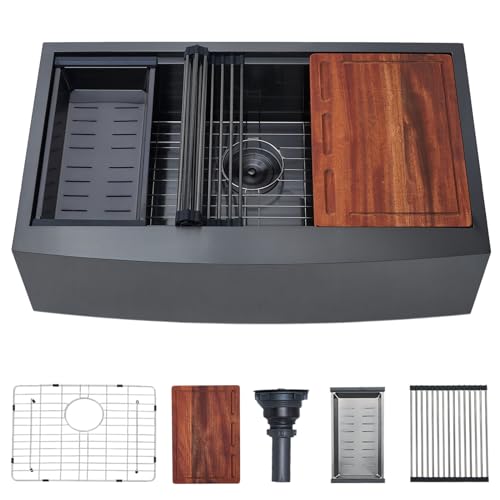
- ✓ Quiet operation
- ✓ Built-in workstation
- ✓ Deep, roomy basin
- ✕ Slightly premium price
| Material and Finish | 16-gauge stainless steel with black nano coating |
| Exterior Dimensions | 33″ L x 20″ W x 9″ D |
| Interior Dimensions | 31″ L x 16″ W x 9″ D |
| Depth Capacity | 9 inches |
| Drain Opening | Standard 3-1/2″ drain |
| Sound and Moisture Management | 3 mm rubber vibration pads; anti-condensation coating |
The first time I dropped this 33″ black farmhouse sink into my cabinet run, the contrast of the matte black against the stainless frame instantly pulled the whole kitchen together. I slid a cutting board across the top edge and heard a satisfying quiet thump—a sign the 3mm rubber pads were doing their job.
You’ll notice the deep 9-inch basin swallowed my largest stock pot without a fight, and the interior corners are softly rounded so nobody is scrubbing hard-to-reach dents.
The workstation design feels thoughtful in real life. You can slide a cutting board across the top and tuck a colander or rack into place without leaving wet towels on the counter.
I used the included roll-up rack to dry veggies and then swapped to a full sink mode when I needed to rinse bowls from a bake day. The X-shaped drainage base kept water moving toward the drain, no standing pools after a heavy wash.
Cleaning is simpler than you’d expect. The black nano coating resists scratches and rust, which is noticeable after a few weeks of everyday use.
The surface stays relatively forgiving when you wipe up after meals, and the 16-gauge stainless steel feels sturdy enough to handle clumsy pots without denting.
Installation is straightforward if you’ve done an under-mount before. The dimensions align with standard cutouts, and the included drain strainer fits perfectly.
The soundproofing cushions the clangs of metal on metal, so kitchen noise stays low during busy dinners.
Overall, it’s easy to recommend if you want a stylish, practical workstation that doesn’t force you to swap between tools and counter clutter. It feels built to last, with thoughtful touches that actually improve daily cooking and cleanup.
Logmey 33 Inch White Farmhouse Sink Fireclay Reversible |

- ✓ Generous deep bowl
- ✓ Reversible front design
- ✓ Durable fireclay glaze
- ✕ Requires deep flange for disposal
- ✕ Cabinet size minimum 36″
| Overall Dimensions | 33.0 in W x 18.0 in D x 10.0 in H |
| Basin Type & Configuration | Single deep bowl, reversible flat side or fluted front apron |
| Material & Finish | Fireclay ceramic with thick reinforced glaze, glossy white finish |
| Minimum Cabinet Size | 36 inches |
| Drainage & Drainage System | Engineered flat bottom sloped to center drain with anti-sag drainage design |
| Included Accessories | Bottom rinse grid and stainless steel drain assembly; requires deep flange for garbage disposal installation |
You’re unboxing the Logmey 33 Inch White Farmhouse Sink Fireclay right after a chaotic week of back-to-back dinner parties. The box feels sturdy, and the glossy white glaze looks pristine in the kitchen light.
When you slide it out, you notice the flat dual-side exterior and the slightly rounded inner corners—nice details that signal real craftsmanship.
The first moment you drop it into the cabinet is telling. The 33×18 footprint sits snugly with a full 10-inch depth in the bowl, giving you a surprisingly generous basin for huge pots.
You’ll feel the heft of fireclay in your hands, and the weight reassures you this isn’t a flimsy install.
You run a test with cold water and a few drying racks. The flat bottom and centered drain mean no more water puddling or shy espresso cups slipping around.
The slightly flared rim and clean right-angle edge look modern, but the inside corners are truly rounded, which makes scrubbing feel almost effortless.
Cooking day arrives, and you scan for heat resistance since you’re dealing with hot pans. The glaze holds up—no staining or dulling after a few simmering sessions.
The reversible design gives you options; you can switch to the fluted front if you want that classic farm aesthetic or keep it sleek flat-front for a contemporary kitchen.
Cleanup is straightforward. The included bottom grid and stainless drain fit perfectly, and the deep bowl swallows stockpots with room to spare.
It’s easy to imagine daily chores flowing smoothly instead of turning into a countertop obstacle course.
In short, this sink feels solid, stylish, and genuinely roomy enough for real-life cooking and cleanup. It balances farmhouse charm with practical, modern usability, which is exactly what you need when your kitchen is the hub of the home.
What Defines the Best Sink Farmer?
The best sink farmer is defined by a combination of skills, practices, and characteristics that enhance their productivity and sustainability in aquaponics or hydroponics systems.
- Knowledge of Aquatic Ecosystems: A deep understanding of aquatic ecosystems is crucial for the best sink farmer, as it allows them to create a balanced environment for fish and plants. This knowledge helps in maintaining water quality, managing nutrient levels, and ensuring the health of both fish and crops.
- Technical Skills: Proficiency in operating and maintaining complex systems such as pumps, filters, and aerators is essential. These technical skills ensure that the sink farmer can troubleshoot and resolve issues quickly, preventing disruptions that could harm the aquatic life or crops.
- Crop and Fish Selection: The ability to choose the right species of fish and plants that complement each other is vital. The best sink farmers select varieties that thrive together, maximizing growth rates and yield, while also considering market demand and environmental adaptability.
- Sustainability Practices: Incorporating sustainable practices like water conservation, waste recycling, and organic farming methods is a hallmark of the best sink farmer. These practices not only improve the ecological footprint of the farming operation but also enhance the quality of the produce.
- Adaptability and Problem-Solving: The best sink farmers are adaptable and skilled problem-solvers, capable of adjusting their methods based on changing conditions such as climate, market trends, or pest infestations. Their ability to innovate and find solutions ensures the longevity and success of their farming operations.
- Community Engagement: Successful sink farmers often engage with their local communities by sharing knowledge and resources. Building a network of support and collaboration can lead to better practices, increased sales, and a stronger local economy.
- Record Keeping and Data Analysis: Effective record keeping and the ability to analyze data related to growth rates, water quality, and production costs are essential for making informed decisions. The best sink farmers use this data to track their progress and optimize their farming practices over time.
How Do Different Farming Techniques Impact Sink Farming Success?
Different farming techniques significantly influence the success of sink farming, affecting yield, sustainability, and resource management.
- Traditional Farming: This technique relies on established practices, utilizing soil-based cultivation with minimal technological intervention. While it can be effective in certain environments, traditional methods often lead to soil degradation and may not optimize resource use, impacting the long-term success of sink farming.
- Hydroponics: Hydroponic farming involves growing plants in nutrient-rich water solutions instead of soil. This method allows for precise control over nutrient delivery and can lead to faster plant growth and higher yields, making it a favorable technique for sink farmers looking to maximize productivity in limited space.
- Aquaponics: Combining aquaculture and hydroponics, aquaponics creates a symbiotic environment where fish waste provides nutrients for plants, while plants help filter and clean the water for fish. This sustainable approach enhances sink farming success by creating a closed-loop system that minimizes waste and maximizes resource efficiency.
- Vertical Farming: Vertical farming utilizes stacked layers of crops in controlled environments, often incorporating LED lighting and climate control. This innovative technique allows sink farmers to grow food in urban areas, reducing land use and increasing yields per square foot, which is crucial for meeting food demands in densely populated regions.
- Organic Farming: Organic farming focuses on using natural methods and materials, avoiding synthetic chemicals and fostering biodiversity. This technique can enhance soil health and ecosystem resilience, contributing to the sustainability of sink farming and appealing to consumers who prioritize eco-friendly practices.
- Permaculture: Permaculture is a holistic approach that designs agricultural systems to mimic natural ecosystems. By integrating plants, animals, and landscapes, this technique promotes biodiversity and resource conservation, leading to a more sustainable and resilient sink farming operation that can thrive in the long term.
What Skills and Knowledge are Essential for Sink Farmers?
The essential skills and knowledge for sink farmers include:
- Aquaponics Knowledge: Understanding the principles of aquaponics is crucial as it combines fish farming and hydroponics. Sink farmers must know how to balance the ecosystem of fish and plants to ensure both thrive, learning about water quality management, nutrient cycling, and the specific needs of both aquatic and terrestrial crops.
- Crop Management Skills: Proficiency in managing various crops is vital, as sink farmers need to cultivate plants that can flourish in a sink environment. This involves knowledge of plant growth cycles, pest management, and the ability to adapt to changing conditions to maximize yield and quality.
- Water Quality Testing: Sink farmers must regularly test and monitor water parameters such as pH, ammonia levels, and dissolved oxygen. This skill ensures a healthy environment for fish and plants, as improper water quality can lead to diseases and poor growth.
- Fish Care and Breeding: Knowledge of fish husbandry, including feeding, breeding, and health management, is essential. Sink farmers need to understand different species’ needs, behavioral patterns, and how to maintain a balanced fish population for optimal production.
- Technical Skills: Familiarity with equipment used in aquaponics systems, such as pumps, filters, and lighting, is important. Sink farmers should be able to troubleshoot and maintain their systems to ensure smooth operations and prevent failures that could impact both fish and plants.
- Business Management: Effective business acumen is needed for planning and running a successful sink farming operation. This includes budgeting, marketing, and understanding local regulations, which helps in making informed decisions that lead to sustainable growth.
- Research and Adaptation: The ability to stay informed about new techniques, technologies, and best practices in aquaponics is essential. Sink farmers should continually research and adapt their methods to improve efficiency and productivity in their systems.
What Are the Environmental Benefits of Sink Farming?
The environmental benefits of sink farming are numerous and impactful, particularly in terms of sustainability and ecosystem health.
- Carbon Sequestration: Sink farming enhances the ability of soil and plants to capture and store carbon dioxide from the atmosphere. This process helps mitigate climate change by reducing the concentration of greenhouse gases.
- Biodiversity Enhancement: By promoting diverse plant and animal species, sink farming creates habitats that support various life forms. This biodiversity is crucial for ecosystem resilience and can improve soil health and productivity.
- Soil Health Improvement: Practices associated with sink farming, such as composting and cover cropping, enhance soil structure and fertility. Healthy soils can better retain water and nutrients, leading to less erosion and runoff.
- Water Conservation: Sink farming techniques often incorporate methods that reduce water usage, such as drip irrigation and rainwater harvesting. This conservation helps maintain local water supplies and reduces the impact on surrounding ecosystems.
- Pollution Reduction: By utilizing organic farming practices, sink farming minimizes the use of synthetic fertilizers and pesticides, which can leach into waterways. This reduction in chemicals helps protect aquatic ecosystems and improves overall water quality.
How Does Sink Farming Influence Local Ecosystems?
Water Management: Sink farming can improve local water retention through the establishment of organic matter and plant roots that help absorb rainfall. This can enhance groundwater recharge and reduce surface runoff, benefiting surrounding aquatic ecosystems and maintaining local water quality.
Pest Control: The diversity of crops in sink farming can create habitats for beneficial organisms that naturally control pest populations, reducing reliance on chemical pesticides. This not only protects the crops but also supports the entire food web in the local ecosystem, promoting environmental health.
Carbon Sequestration: Sink farming practices can lead to enhanced carbon sequestration, as healthy plants capture and store carbon dioxide from the atmosphere. This process helps mitigate climate change impacts and supports the development of a more stable climate, which is essential for maintaining diverse ecosystems.
Can Sink Farming Help Reduce Carbon Footprint?
Yes, sink farming can help reduce carbon footprint.
Sink farming, which involves practices designed to enhance carbon sequestration in agriculture, contributes significantly to lowering greenhouse gas emissions. By adopting methods such as cover cropping, reduced tillage, and agroforestry, sink farmers can create more resilient ecosystems that absorb carbon dioxide from the atmosphere. These practices improve soil health, increase biodiversity, and promote sustainable land use, all of which play a crucial role in mitigating climate change.
Moreover, sink farming not only focuses on carbon capture but also fosters a more sustainable agricultural model. By enhancing the organic matter in the soil through composting and other organic practices, sink farmers improve the soil’s ability to retain moisture and nutrients, leading to better crop yields without the heavy reliance on synthetic fertilizers and pesticides. This holistic approach not only reduces the carbon footprint of farming operations but also supports the resilience of local food systems against climate fluctuations.
What Tools and Resources are Beneficial for Sink Farmers?
Several tools and resources are beneficial for sink farmers to enhance their productivity and sustainability.
- Soil Testing Kits: These kits allow farmers to analyze the nutrient composition and pH level of their soil, helping them make informed decisions about fertilization and amendments. Regular soil testing can lead to improved crop yields by ensuring that the plants receive the right balance of nutrients necessary for optimal growth.
- Irrigation Systems: Efficient irrigation systems, such as drip or sprinkler systems, are essential for delivering water directly to the plants’ roots. This not only conserves water but also promotes healthier crop development by preventing overwatering and soil erosion.
- Crop Rotation Guides: Utilizing crop rotation guides helps farmers plan their planting schedules to maintain soil health and reduce pest infestations. By alternating the types of crops grown in a given area, farmers can enhance biodiversity and improve the resilience of their farming system.
- Pest Management Tools: Integrated Pest Management (IPM) tools, including traps and organic pesticides, can help farmers effectively control pest populations while minimizing environmental impact. These tools encourage sustainable practices that protect beneficial insects and maintain ecological balance in the farm ecosystem.
- Farm Management Software: Software solutions designed for farm management enable farmers to track their operations, monitor crop progress, and manage finances more effectively. By integrating data analysis and planning tools, farmers can optimize their resources and increase overall productivity.
- Composting Equipment: Composting tools allow farmers to recycle organic waste and create nutrient-rich compost for their soils. This not only reduces waste but also enhances soil structure and fertility, promoting healthier crops and reducing the need for synthetic fertilizers.
- Weather Monitoring Devices: Accurate weather monitoring tools, such as rain gauges and temperature sensors, provide valuable data that help farmers make timely decisions regarding planting, irrigation, and pest control. By understanding weather patterns, farmers can proactively manage risks associated with climate variability.
Which Technologies Enhance Efficiency for Sink Farmers?
The main technologies that enhance efficiency for sink farmers include:
- Precision Agriculture Tools: These tools utilize data analytics and GPS technology to optimize farming practices.
- Automated Irrigation Systems: These systems provide precise water delivery, reducing waste and labor while improving crop yield.
- Soil Sensors: Soil sensors monitor moisture levels and nutrient content, allowing farmers to make informed decisions on fertilization and irrigation.
- Drones: Drones are used for crop monitoring, surveying land, and even applying fertilizers or pesticides, making farming more efficient.
- Mobile Farming Apps: These apps help farmers manage operations, track expenses, and monitor crop health from their smartphones.
Precision Agriculture Tools: These include software and hardware solutions that gather data from various sources such as satellites and sensors. By analyzing this data, farmers can make better decisions regarding planting schedules, crop selection, and resource allocation, significantly enhancing productivity and efficiency.
Automated Irrigation Systems: These systems often use programmable timers and moisture sensors to ensure that crops receive the right amount of water at the right times. This technology not only conserves water but also reduces labor costs, as it minimizes the need for manual irrigation management.
Soil Sensors: By providing real-time data on soil conditions, these sensors enable farmers to optimize their use of fertilizers and irrigation. This can lead to healthier crops and reduced input costs, as farmers can avoid over-fertilizing or over-watering their fields.
Drones: Drones equipped with cameras and sensors can capture detailed images and data of large farming areas in short periods. They help in identifying problem areas, assessing crop health, and even applying agricultural products with precision, thus saving time and resources.
Mobile Farming Apps: These applications allow farmers to keep track of various aspects of their operations, such as planting schedules, inventory management, and financial tracking. By centralizing information on a mobile platform, farmers can enhance their decision-making and streamline their operations efficiently.
What Educational Resources are Available for Aspiring Sink Farmers?
There are several educational resources available for aspiring sink farmers to enhance their knowledge and skills in this niche agricultural field:
- Online Courses: Many platforms offer online courses specifically focused on sink farming techniques, sustainable practices, and crop management. These courses often include video lectures, readings, and interactive quizzes to help learners grasp the concepts effectively.
- Workshops and Seminars: Local agricultural organizations frequently host workshops and seminars that cover various aspects of sink farming, including soil health, water management, and pest control. Attending these events allows aspiring farmers to gain hands-on experience and network with industry experts and peers.
- Books and Publications: There are numerous books and research papers dedicated to sink farming, which provide in-depth insights into best practices, case studies, and innovative techniques. Reading these materials can help farmers develop a solid theoretical foundation as well as practical skills.
- YouTube Channels: Various agricultural experts and organizations maintain YouTube channels that share tutorials, tips, and success stories related to sink farming. These visual resources can be particularly helpful for visual learners who benefit from seeing techniques in action.
- Online Forums and Communities: Engaging in online forums and communities allows aspiring sink farmers to connect with experienced farmers and ask questions, share experiences, and exchange ideas. This collaborative environment can foster learning and provide valuable support.
- Government Programs and Grants: Many governments offer educational programs, resources, and grants for farmers interested in sustainable practices, including sink farming. These initiatives can provide financial assistance and access to training, helping aspiring farmers get started on the right foot.
What Challenges Do Sink Farmers Encounter?
Sink farmers face various challenges that can impact their productivity and sustainability.
- Water Quality Management: Sink farmers often work with water sources that may be contaminated or have varying levels of nutrients. Maintaining optimal water quality is essential for crop health, requiring regular testing and potential treatment, which can be costly and time-consuming.
- Soil Erosion: The unique conditions of sink farming can lead to increased soil erosion, particularly in areas with heavy rainfall or poor vegetation cover. This erosion can reduce soil fertility and disrupt the ecosystem, making it vital for farmers to implement erosion control measures.
- Pest and Disease Control: The dense planting often found in sink farming can create a favorable environment for pests and diseases. Farmers must be vigilant in monitoring crops and may need to employ integrated pest management strategies, which can involve both chemical and organic solutions.
- Market Access: Sink farmers may struggle with accessing markets to sell their produce, especially in remote areas. This challenge can be exacerbated by transportation issues or a lack of established supply chains, which can limit the farmers’ ability to profit from their hard work.
- Climate Variability: Changes in climate, such as unexpected droughts or floods, pose significant risks to sink farming. Farmers must adapt to these conditions, which may involve changing planting schedules or investing in more resilient crop varieties.
- Financial Constraints: Many sink farmers operate on tight budgets, limiting their ability to invest in necessary technologies or infrastructure. This financial strain can hinder their capacity to adopt innovative farming practices that could enhance productivity and sustainability.
How Can Sink Farmers Address Issues like Pest Management?
Sink farmers can address pest management issues through various effective strategies:
- Integrated Pest Management (IPM): This approach combines biological, cultural, physical, and chemical tools to manage pests in an environmentally friendly way. By monitoring pest populations and using a mix of strategies, sink farmers can minimize reliance on chemical pesticides while effectively controlling pest outbreaks.
- Crop Rotation: Rotating different crops in a planned sequence can help disrupt pest life cycles and reduce their populations. This practice not only helps in managing pests but also enhances soil health and fertility, making farms more resilient over time.
- Use of Natural Predators: Introducing or encouraging natural predators of pests can help keep pest populations in check. For instance, ladybugs can control aphid populations, reducing the need for chemical interventions and promoting a balanced ecosystem.
- Organic Pesticides: Utilizing organic pesticides derived from natural sources can be an effective method for controlling pests without the harmful effects of synthetic chemicals. These products often target specific pests and are less likely to harm beneficial insects and the environment.
- Monitoring and Scouting: Regular monitoring of crops for signs of pest activity allows farmers to take timely action before infestations escalate. Implementing scouting techniques can help identify pest issues early on, leading to more effective and targeted management strategies.
- Soil Health Management: Healthy soil leads to robust plants that are more resistant to pests. Practices such as cover cropping, reduced tillage, and adding organic matter can improve soil structure and nutrient content, ultimately supporting plant health and reducing pest vulnerability.
- Education and Training: Staying informed about the latest pest management techniques and trends can empower sink farmers to make better decisions. Participating in workshops, extension services, and online resources can enhance their knowledge and skills in pest management.