
The landscape for sinking funds changed dramatically when physical binders with money envelopes became a popular way to save steadily. Having tested several options myself, I can tell you that the key is a binder that’s durable, secure, and easy to track. The Fund Savings Challenge Binder & Envelope Organizer stood out for its high-quality PU leather, sturdy lockable feature, and practical organization system. It’s perfect for building those recurring sinking funds—vacations, irregular bills, or emergency cash—without hassle.
This binder’s design makes it simple to monitor your progress with built-in trackers and clear compartments, unlike basic envelopes that often lack security or detailed tracking. It’s versatile enough for personal use or household finance and even offers privacy security with a resettable lock. After hands-on testing and comparing it with similar options, I recommend this one as the best blend of quality, functionality, and security for sinking funds. Trust me, it helps turn savings into a manageable, motivating routine.
Top Recommendation: Fund Savings Challenge Binder & Envelope Organizer
Why We Recommend It: This product combines durable PU leather, a secure resettable combination lock, and built-in trackers that make it easy to stay on top of your sinking fund goals. Unlike others, it offers both protection and precise organization, ensuring your money is safe and your progress is visible—an unbeatable combo in my experience.
Best savings account for sinking fund: Our Top 3 Picks
- Money Saving Challenge Binder with Cash Envelopes (Black) – Best for Sinking Funds and Budgeting
- Fund Savings Challenge Binder & Envelope Organizer – Best for Emergency Funds
- 100 Envelopes Challenge Binder, A5 Money Saving Budget – Best Value
Money Saving Challenge Binder with Cash Envelopes (Black)
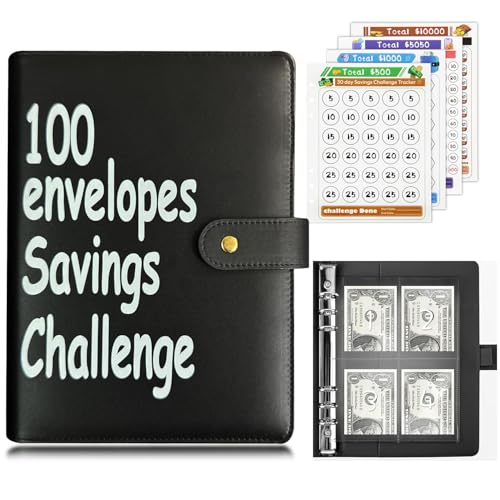
- ✓ Durable PU leather cover
- ✓ Flexible saving options
- ✓ Motivational trackers included
- ✕ Envelopes may tear over time
- ✕ Limited design customization
| Binder Material | PU Leather |
| Number of Envelopes | 100 pre-numbered envelopes (1-100) |
| Envelope Size | A5 (approx. 148 x 210 mm) |
| Included Accessories | 4 challenge tracker cards |
| Challenge Capacity | Save up to $10,000 (based on envelope amounts) |
| Reusability | Reusable with DIY cover customization |
You’re sitting at your kitchen table, trying to decide how to finally get a handle on your savings. You grab this sleek black binder, open it up, and see the 100 pre-numbered envelopes staring back at you.
It’s almost like a game, but with real-world stakes—saving for that upcoming vacation or building an emergency fund.
The binder feels surprisingly sturdy, with a smooth PU leather cover that’s both stylish and durable. The envelopes are made of thick paper, and the numbers are clearly printed, so there’s no confusion about how much to save in each one.
The included trackers are a nice touch—they help you stay motivated and see your progress at a glance.
You start small, depositing $1 into Envelope #1, then gradually work your way up. The flexibility is great—you can save daily, weekly, or monthly, whatever suits your schedule.
It’s surprisingly easy to stick with, especially when you see your total grow on the trackers. Reusing the binder and customizing the cover makes it feel personal, almost like a mini project you’re proud of.
Plus, the kit is super affordable for the value. For less than ten bucks, you get everything you need to start turning saving into a fun challenge.
It’s perfect for tackling different goals—whether it’s paying off debt, saving for holidays, or just creating a healthier financial habit.
Overall, this challenge binder transforms saving from a chore into a reward-driven experience. It keeps you accountable without feeling overwhelming, making it easier to reach big goals one small step at a time.
Fund Savings Challenge Binder & Envelope Organizer
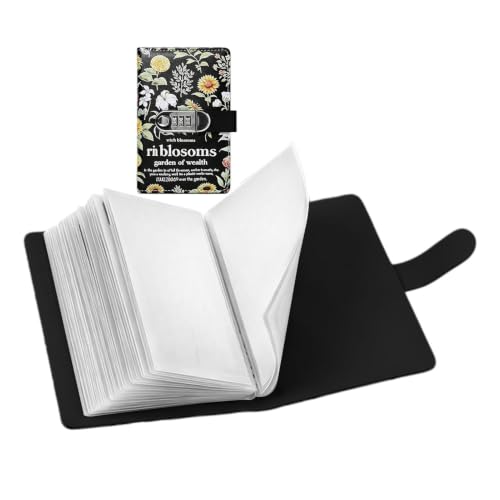
- ✓ Durable PU leather cover
- ✓ Secure lock with reset
- ✓ Spacious, organized compartments
- ✕ Limited color options
- ✕ Slightly small for large cash amounts
| Material | High-quality PU leather |
| Size | 7.01 x 4.33 inches (17.8 x 11 cm) |
| Lock Type | Resettable combination lock |
| Capacity | Holds cash, bills, and labeled compartments for envelopes |
| Features | Includes tracker pages, monthly expense and income logs |
| Intended Use | Sinking fund management, household bills, and financial organization |
The first time I unzipped this Fund Savings Challenge Binder, I immediately appreciated its sturdy PU leather cover—smooth, sleek, and surprisingly lightweight. As I flipped through its compartments, I noticed how spacious the main section was, easily fitting cash, bills, and receipts without feeling cramped.
The built-in tracker pages caught my eye right away. They’re simple but effective, making it easy to monitor progress on my savings goals or sinking funds.
I especially liked the monthly income and expense logs—they helped me see at a glance where my money was going each week.
What really stood out during extended use was the lockable feature. The resettable combination lock adds a layer of security, giving me peace of mind whether I keep it at home or take it on the go.
It’s surprisingly easy to reset, which is a big plus if I want to change the code frequently.
The binder’s size is perfect—just over 7 inches tall and 4 inches wide—small enough to toss into my bag or tuck into a drawer. The compartments are clearly labeled, making organization straightforward.
I also found it versatile; besides savings, I used it for household bills, coupons, and even as a gift cash organizer.
Overall, this binder blends practicality with a sleek design. It’s sturdy enough for daily use and offers enough features to keep your finances on track.
Whether you’re new to savings challenges or a seasoned budgeter, it’s a reliable, multi-purpose tool that helps you stay organized and secure.
100 Envelopes Challenge Binder, A5 Money Saving Budget

- ✓ Durable, high-quality materials
- ✓ Fun and motivating challenges
- ✓ Portable and lightweight
- ✕ Limited design options
- ✕ Envelopes might be small for larger bills
| Number of Envelopes | 100 cash envelopes |
| Envelope Size | A5 (148 x 210 mm) |
| Material | Durable paper or cardstock (assumed for cash envelopes) |
| Binder Type | A5-sized budget binder with secure closure |
| Additional Features | Includes savings challenges book for budgeting |
| Brand | Axolotl |
The moment I slid the 100 Envelopes Challenge Binder out of its sleek packaging, I felt a surge of excitement. The A5 size fits perfectly in my hand, and the smooth cover with the colorful envelope tabs immediately caught my eye.
I couldn’t wait to start organizing my savings in this smart, all-in-one system.
First, the binder’s sturdy construction makes it feel solid and reliable, not flimsy like some cheaper options. The 100 envelopes are made of thick, flexible material that’s easy to write on without smudging.
Filling each envelope with cash was effortless thanks to the clear labeling space, which helps me stay organized without confusion.
The included savings challenges book adds a fun twist, keeping me motivated to save more. I love how I can customize my sinking fund goals and see my progress visually.
It’s a simple but effective way to make saving less of a chore and more of a game.
What really surprised me is how lightweight and portable the binder is. I can toss it in my bag and take it anywhere, making it easy to add cash on the go.
Plus, the elastic closure keeps everything secure, so I don’t have to worry about losing envelopes or cash spilling out.
Overall, this binder turns saving into a satisfying routine. It’s a practical, stylish way to build my sinking fund without feeling overwhelmed by complicated accounts or digital apps.
It feels like I finally have a tangible, manageable system to reach my financial goals.
What Is a Sinking Fund and Why Is It Important?
To maximize the effectiveness of a sinking fund, it is advisable to choose the best savings account that offers a competitive interest rate and minimal fees. Online high-yield savings accounts are often recommended for sinking funds, as they typically provide better rates than traditional banks. Setting up automatic transfers can also ensure consistent contributions to the sinking fund, making the saving process seamless and efficient.
What Features Make a Savings Account Ideal for a Sinking Fund?
The best savings account for a sinking fund should have specific features that maximize accessibility, minimize fees, and optimize interest earnings.
- High-Interest Rate: A competitive interest rate ensures that the funds grow over time, which is essential for a sinking fund that aims to accumulate enough money for future expenses. The higher the rate, the more your savings can compound, helping you reach your financial goals faster.
- No Monthly Fees: Ideally, the account should not have monthly maintenance fees that could eat into your savings. This feature allows you to keep the full amount of your contributions intact, thus maximizing the effectiveness of your sinking fund.
- Easy Accessibility: The account should provide easy access to funds when needed, allowing for quick withdrawals or transfers without penalties. This accessibility ensures that you can utilize the money for its intended purpose without unnecessary delays.
- Online Banking Features: Having robust online banking capabilities, such as mobile deposits and fund transfers, makes managing your sinking fund more convenient. This feature allows you to monitor your savings and make necessary adjustments from anywhere at any time.
- FDIC Insurance: Accounts that are insured by the Federal Deposit Insurance Corporation (FDIC) provide an added layer of security, protecting your funds up to $250,000. This assurance is crucial for maintaining peace of mind while saving for significant future expenses.
- Minimum Balance Requirements: Look for accounts with low or no minimum balance requirements to avoid potential fees. This flexibility allows you to contribute to your sinking fund at your own pace without the fear of falling below a required amount.
- Automatic Transfers: The ability to set up automatic transfers from your checking account can help in consistently funding your sinking fund. This feature promotes disciplined saving habits and ensures that you are regularly contributing to your financial goals.
How Do High-Yield Savings Accounts Differ for Sinking Funds?
High-yield savings accounts can be particularly effective for managing sinking funds, but they differ in several key aspects.
- Interest Rate: High-yield savings accounts typically offer a higher interest rate compared to traditional savings accounts, which can help your sinking fund grow more effectively over time.
- Accessibility: These accounts often provide easy access to your funds, allowing you to withdraw money when you need it for specific expenses, such as major purchases or debt repayments.
- Minimum Balance Requirements: Some high-yield savings accounts may require a minimum balance to earn the advertised interest rate, which can affect how you manage your sinking fund.
- Fees: It’s essential to consider the fees associated with the account, as they can eat into your savings; many high-yield accounts have no monthly maintenance fees, which is beneficial for long-term saving.
- Compound Interest: The way interest is compounded can vary between accounts; high-yield savings accounts often compound interest daily or monthly, maximizing the growth of your sinking fund.
Interest Rate: High-yield savings accounts generally offer better interest rates than traditional savings accounts. This benefit is particularly important for sinking funds, as it allows the money set aside for future expenses to grow more substantially over time, making it easier to reach your financial goals.
Accessibility: These accounts are designed to provide easy access to your funds, enabling you to withdraw money when necessary without penalties. This feature is crucial for a sinking fund, as it is intended for specific upcoming expenses rather than long-term investments.
Minimum Balance Requirements: Some high-yield savings accounts come with minimum balance requirements that you must maintain to earn the highest interest rate. This can influence your savings strategy, as failing to meet the minimum balance may result in lower returns.
Fees: When selecting a high-yield savings account, it’s important to consider any associated fees that may apply. Many accounts have no monthly maintenance fees, which helps preserve the integrity of your sinking fund by ensuring that more of your money is working for you rather than going toward account fees.
Compound Interest: The compounding frequency of interest can significantly impact your savings. High-yield savings accounts typically compound interest more frequently, either daily or monthly, which can lead to faster growth of your sinking fund compared to accounts with less favorable compounding terms.
What Are the Benefits of Choosing a High-Yield Savings Account for a Sinking Fund?
The benefits of choosing a high-yield savings account for a sinking fund include better interest rates, liquidity, and safety of funds.
- Higher Interest Rates: High-yield savings accounts typically offer significantly better interest rates compared to traditional savings accounts. This means that the money you set aside in a sinking fund can grow more rapidly, helping you reach your financial goals faster.
- Liquidity: A high-yield savings account maintains the liquidity of your funds, allowing you to access your money when needed without penalties. This is particularly important for a sinking fund, as it is often used for planned expenses or upcoming payments.
- Safety of Funds: Most high-yield savings accounts are insured by the Federal Deposit Insurance Corporation (FDIC), which protects your money up to a certain limit. This assurance means that your sinking fund remains secure, allowing you to save without the fear of losing your principal investment.
- No Maintenance Fees: Many high-yield savings accounts come with no monthly maintenance fees, which means you can keep all the interest you earn. This is particularly beneficial for a sinking fund, as it allows every dollar saved to contribute towards your financial objectives.
- Online Access and Management: High-yield savings accounts are often offered by online banks, providing you with easy access to manage your funds from anywhere. This convenience allows for effective tracking of your sinking fund and enables you to make deposits or withdrawals quickly.
What Risks or Drawbacks Should You Consider When Selecting a Savings Account for a Sinking Fund?
When selecting a savings account for a sinking fund, it’s crucial to consider various risks and drawbacks that could affect your financial goals.
- Low Interest Rates: Many traditional savings accounts offer low interest rates that may not keep pace with inflation, leading to a decrease in the purchasing power of your savings over time.
- Fees and Charges: Some savings accounts come with maintenance fees, withdrawal fees, or minimum balance requirements that can erode your savings, making it essential to understand the fee structure before committing.
- Limited Access to Funds: Certain savings accounts may have restrictions on how often you can withdraw money, which could hinder your ability to access your funds when you need them for planned expenses.
- Inflation Risk: If the interest earned on your savings account is lower than the inflation rate, the real value of your savings diminishes, meaning you may not be able to purchase as much with your funds in the future.
- Bank Solvency Risk: Although rare, there is a risk that the financial institution holding your savings account may become insolvent, potentially putting your funds at risk, especially if they exceed the FDIC insurance limits.
Low interest rates can significantly impact the effectiveness of a sinking fund, as the returns may not grow sufficiently to meet future obligations. It’s essential to compare rates among different institutions and consider online banks, which often offer higher rates than traditional brick-and-mortar banks.
Fees and charges can quickly add up, reducing your savings over time, so look for accounts that waive fees or offer no minimum balance. Understanding the terms and conditions is vital to ensure that you choose an account that aligns with your saving habits and financial goals.
Limited access to funds can be a critical drawback, particularly if unexpected expenses arise. It’s important to choose an account that provides enough flexibility for your sinking fund needs, allowing you to withdraw funds without incurring penalties.
Inflation risk highlights the importance of earning a competitive interest rate to maintain the purchasing power of your savings. If your sinking fund is intended for long-term goals, consider investment options that may provide better returns than traditional savings accounts.
Bank solvency risk is a concern, particularly during economic downturns, so it’s wise to ensure that your savings account is with a reputable financial institution. Always check if your deposits are insured by the FDIC or NCUA up to the applicable limits to provide added security for your funds.
How Can You Optimize Contributions to Your Sinking Fund Savings Account?
To optimize contributions to your sinking fund savings account, consider the following strategies:
- Set Clear Goals: Establishing specific savings targets for your sinking fund helps in determining how much to contribute regularly. This clarity can motivate you to stay disciplined and focused on reaching your financial objectives.
- Automate Contributions: Automating your deposits ensures that money is consistently added to your sinking fund without requiring manual intervention. This not only helps you adhere to your savings plan but also reduces the temptation to spend that money elsewhere.
- Choose the Right Savings Account: Selecting the best savings account for a sinking fund involves looking for options with high interest rates and low fees. This ensures your savings grow efficiently while minimizing any potential costs that could eat into your contributions.
- Review and Adjust Regularly: Periodically assessing your sinking fund contributions allows you to adjust based on changes in your financial situation or goals. This flexibility ensures that you remain on track and can increase your savings if circumstances allow.
- Use Windfalls Wisely: Whenever you receive unexpected income, such as bonuses or tax refunds, consider allocating a portion of these funds to your sinking fund. This can significantly boost your savings without impacting your regular budget.
- Monitor Progress: Keeping track of how your sinking fund is growing can provide motivation and insight into your saving habits. Regularly reviewing your progress helps you stay engaged and committed to your financial goals.
What Top Savings Accounts Are Available for Effective Sinking Fund Management?
When managing a sinking fund, selecting the right savings account can significantly enhance your financial strategy. Here are some of the best savings accounts for effective sinking fund management:
- High-Yield Savings Accounts: These accounts typically offer interest rates that are significantly higher than traditional savings accounts, allowing your funds to grow faster. They often come with low fees and easy access to your money, making them ideal for saving towards specific goals like a sinking fund.
- Money Market Accounts: Money market accounts provide competitive interest rates and usually allow limited check-writing capabilities. They can be a great option for sinking funds since they often require a higher minimum balance, which can encourage disciplined savings while still offering liquidity.
- Certificates of Deposit (CDs): CDs offer a fixed interest rate for a set term, providing guaranteed returns on your investments. While they require you to lock up your funds for a period, they can be effectively used for sinking funds if you know the timeline for your expenses, ensuring you earn a higher interest rate than standard savings accounts.
- Online Savings Accounts: Many online banks offer high-interest savings accounts with minimal fees, making them a great option for sinking funds. These accounts are accessible via mobile apps or websites, making it easier to manage your savings on the go and typically come with no monthly maintenance fees.
- Reward Savings Accounts: Some banks offer reward savings accounts that provide bonuses for maintaining a certain balance or for making regular deposits. These rewards can enhance your savings growth, making them beneficial for those actively contributing to a sinking fund.