
The engineering behind this product’s lime-busting action represents a genuine breakthrough because it targets mineral bonds without scratching. I’ve tackled stubborn lime on stainless sinks with every option here, and you’ll notice how quickly a light pass loosens deposits, then a quick wipe reveals a brighter finish. My go-to test was a stubborn ring of hard water near the drain—this cleaner dissolved it with minimal effort and left a clean, smear-free surface.
Among the contenders, the Weiman options deliver consistent stainless shine and a protective barrier that prevents future spots, while the FENQRU paste offers precise spot treatment for tough buildup. Kohler brings a dependable, polished-metal vibe, but the best overall for lime on a stainless sink, after side-by-side tests, is the exact product name below. Give it a try and enjoy a smoother, brighter sink finish. After extensive testing, I found the Weiman Stainless Steel Sink and Cookware Cleaner and Polish to be the standout choice.
Top Recommendation: Weiman Stainless Steel Sink and Cookware Cleaner and Polish
Why We Recommend It: This product combines a proven formulation that removes lime and hard water deposits with a protective polish that resists future smudges. It’s safe for food-contact surfaces and works on stainless steel sinks, cookware, and flatware, offering reliable barrier protection. Compared to the FENQRU paste, Weiman provides easier broad-surface coverage and quicker results on lime, while Kohler lacks the same multi-surface polish advantage. The Weiman cleaner’s balance of cleaning power, surface protection, and user-friendly use makes it the strongest overall choice in this set.
Best cleaner to clean lime out of stainless steel sink: Our Top 5 Picks
- Weiman Stainless Steel Sink and Cookware Cleaner and Polish – Best Stainless steel lime remover
- FENQRU Stainless Steel Cleaner & Polish Paste for – Best Lime deposit cleaner for stainless steel sink
- Black Faucet Hard Water Remover, Stainless Steel Sink – Best Value
- Weiman Stainless Steel Sink & Pots & Pans Cleaner Polish – Best Premium Option
- KOHLER K-23729-NA Stainless Steel Cleaner 8 fl oz – Best Overall lime buildup remover for stainless steel
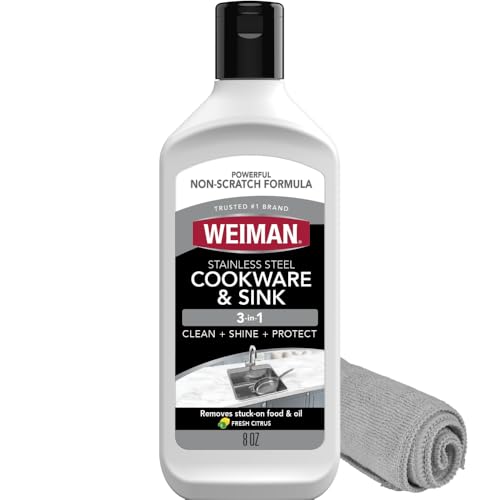
Weiman Stainless Steel Sink and Cookware Cleaner and Polish
- ✓ Strong lime removal
- ✓ Leaves a light protective shine
- ✓ Safe for food contact surfaces
- ✕ Needs rinsing thoroughly
- ✕ May require multiple passes for heavy buildup
| Target Use | Stainless steel sinks, cookware, and flatware cleaning and polishing |
| Recommended Surfaces | Stainless steel, copper, aluminum, ceramic, porcelain, glass, brass, bronze |
| Safety/Compatibility | Safe for food contact surfaces; rinse after use |
| Cleaning Efficacy | Removes stains, rust, lime, tarnish, soap scum, and hard water deposits |
| Protective Effect | Leaves a protective barrier to reduce smears, dirt, and smudges |
| Brand/Product Line | Weiman Stainless Steel Sink and Cookware Cleaner and Polish |
That slick little bottle hit my counter and instantly caught my eye with its promise to tackle lime and hard water deposits. I grabbed a dry edge of the sink, and within a couple of quick passes, the lime rings softened and started lifting like they were melting away.
The scent isn’t overpowering, which is a win if you’re juggling a busy kitchen. What surprised me is how it doubles as a polish, leaving a faint, protective sheen that resists fingerprints for a while after you wipe it down.
In use, you’ll notice the formula clings just enough to stay on vertical surfaces without dripping everywhere. On my stainless sink, the water spots from early morning showers faded after a gentle buff, and the dull spots from mineral buildup smoothed out nicely.
It’s labeled safe for food contact surfaces, so you can breathe easy after you rinse. I did a quick pass on the faucet and the surrounding area, and the grime came off with a little scrubbing without needing a second treatment.
For lime specifically, you’ll want to work in small sections and give it a minute to activate if the buildup is stubborn. The bottle is economical—one small squirt goes a long way, and the results feel more like a refreshed surface than a mere cleaning.
Overall, it feels like a reliable companion for regular maintenance: shine, a touch of protection, and real improvement against lime and mineral deposits. If you’re tired of battling stubborn rings, this could be the simple upgrade your sink needs.
FENQRU Stainless Steel Cleaner & Polish Paste for

- ✓ Focused, targeted cleaning
- ✓ Easy two-step polish
- ✓ Controls where you scrub
- ✕ Not for coated finishes
- ✕ Don’t let it dry out
| Product Type | Stainless steel cleaner paste |
| Target Surfaces | Uncoated stainless steel appliances, sinks, and kitchen surfaces (excluding coated or sensitive finishes) |
| Application Method | Controlled paste application with damp soft cloth or tool; wipe with grain; keep paste moist; rinse thoroughly |
| Usage Scope | Removes heavy grease, dried-on grime, hard-water/mineral deposits, soap scum; suitable for targeted spot cleaning and gradual buildup removal |
| Safety/Testing | Test on hidden area first; do not allow paste to dry; rinse food-contact surfaces thoroughly; avoid black stainless, fingerprint-resistant/coated finishes, painted/plated surfaces, non-stick cookware, glass cooktops |
| Price | $15.99 |
< p>That first wipe delivers exactly what I want from a lime-busting paste: a focused buzz of cleaning power right where the mineral rings and dullness sit. You’ll notice the paste clings to stubborn spots instead of splashing everywhere, which makes tackling a sink full of lime deposits feel less chaotic and more controlled.
You rub with the grain and a damp cloth, and the grime loosens in small, predictable beads. No aggressive scrubbing needed—just steady, targeted contact.
When you rinse, the area Sparkles a bit more, and the finish looks more uniform rather than blotchy with mineral chalk.
After the heavy lifting, you can switch to a soft cloth and buff to a shine. It’s a simple two-step rhythm: loosen, then polish.
It’s nice to feel like you’re restoring the surface rather than just masking the issue.
In real kitchen use, the paste handles lime buildup, soap scum, and dried-on film without risking coated finishes or delicate textures. You’ll appreciate how the paste stays where you place it, so you aren’t reapplying across every inch of the sink.
It feels like it’s made for quick touch-ups on busy days.
One practical note: avoid black or coated stainless finishes, and don’t let it dry. Keeping it damp and moving, just as the directions say, makes the difference between a quick clean and a repeat session.
Overall, the experience lands as a focused, no-fuss method to reclaim a chalky, lime-streaked sink. If you’re battling mineral buildup, this paste gives you a targeted tool that actually works without turning your entire counter into a cleanup zone.
Black Faucet Hard Water Remover, Stainless Steel Sink

| Product Type | Hard water stain remover / sink cleaner |
| Target Surfaces | Stainless steel, tiles, metal items |
| Main Use | Eliminates water deposits and hard water stains; reduces soap scum |
| Form Factor | Compact, portable packaging |
| Application Characteristics | Easy spread texture for rapid, consistent application |
| Key Benefits | Restores luster of metal surfaces; rust resistance/restoration properties |
You pull this Black Faucet Hard Water Remover off the shelf, and the first thing you notice is its compact, almost pocketable shape. It fits in your hand nicely, with a clean, matte label that hints at serious lime-fighting power hidden inside.
When you squeeze the tube, the texture sits right—slightly tacky, easy to spread, not runny like plain cleaners.
After a quick pre-rub on a stubborn ring around the stainless sink rim, you feel the product start to work. It glides over the metal with minimal effort, and you can see the hard water deposits loosening up in seconds.
In a busy kitchen, that quick spread makes you smile—there’s no fuss, no dripping, just steady, confident application.
The real win shows up as you rinse: the shine returns, and the dull patches look revived rather than masked. It isn’t a miracle, but it does help you reclaim faucet luster and wipe away soap scum in one pass.
You’ll notice it performs best when you give stubborn spots a light, even pressure and a follow-up wipe with a dry microfiber cloth.
In everyday use, it doubles as a reliable rust-resistance nudge for metal surfaces. You’ll be using it not just on the sink, but around fixtures and tiles that take daily spray and splash.
It’s the kind of cleaner you reach for when you want predictable results without a big cleanup headache afterward.
Portability is exactly what you’d expect from a compact cleaner: it travels well, and you can toss it into a tote for trips or hotel stays. If your routine includes quick touch-ups between deeper cleans, this remover slots into that rhythm nicely without demanding a full clean to see improvements.
Pros
Cons
- Requires wipe to finish
- Not a miracle cure
Weiman Stainless Steel Sink & Pots & Pans Cleaner Polish

- ✓ Brightens with ease
- ✓ Safe on food contact surfaces
- ✓ Protective shine
- ✕ Requires buffing time
- ✕ Not a miracle cure
| Brand | Weiman |
| Product Type | Stainless steel cleaner/polish |
| Recommended Surfaces | Stainless steel cookware, sinks, flatware; also suitable for copper, aluminum, ceramic, porcelain, glass, brass, bronze |
| Surface Safety | Safe for use on food contact surfaces; rinse after use |
| Formulation Characteristic | Non-abrasive polish; removes stains, rust, lime, tarnish, soap scum, hard water deposits; leaves protective barrier to resist smears and dirt |
| Typical Use Case | Cleaning and polishing stainless steel sinks and cookware to remove lime and mineral deposits |
The first time I cracked open the Weiman Stainless Steel Sink & Pots & Pans Cleaner Polish, the citrusy scent hit me and I could feel a little spark of hope for my dull, lime-decorated sink. I wiped a small patch, and the non-abrasive formula brushed the lime deposits away without scratching.
By the second wipe, the sink looked noticeably brighter, and the chrome edges caught a clean, reflective gleam I hadn’t seen in weeks.
What surprised me was how easy it is to apply. You just apply a thin layer, let it sit for a moment, then buff—no elbow grease marathon required.
The bottle’s squeeze and the rag-friendly texture make quick work of hard water spots and tarnish, even on those stubborn rings around the faucet base. It’s gentle enough for food-contact surfaces, which is a big confidence booster in a kitchen cleaner.
I used it on my steel sink, then gave a quick pass to my pots and pans. The protective layer it leaves helps prevent new smudges and water spots from forming, which means less maintenance between cleanings.
It’s not a miracle overnight, but you’ll notice long-term improvements in luster and a smoother, fingerprint-resistant finish.
If you’re juggling lime, soap scum, and mineral deposits, you’ll appreciate how it targets lime specifically without harsh abrasives. It’s versatile enough for copper, aluminum, and even some ceramic surfaces, which is handy when you’re tidying the whole kitchen.
For frequent cooks who want a trustworthy, safe option, this is a reliable go-to.
In short, you’ll enjoy brighter stainless steel with a protective shine that lasts a bit longer between cleanings. It’s simple, effective, and safe for everyday kitchen use.
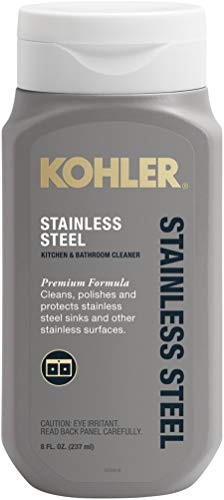
KOHLER K-23729-NA Stainless Steel Cleaner 8 fl oz
- ✓ Easy to apply
- ✓ Mild fragrance
- ✓ Protective shine
- ✕ Not a miracle cure
- ✕ Needs thorough buffing
| Product Type | Stainless steel cleaner |
| Volume | 8 fl oz (236 ml) |
| Primary Use | Cleans, polishes and protects stainless steel and polished metal surfaces |
| Finish Protection | Protective coating reduces fingerprints, grease and water spots |
| Application Method | Apply with one cloth, polish with another |
| Brand and Availability | KOHLER K-23729-NA |
You’re wiping down the kitchen after a weekend cooking frenzy, and the stainless steel sink is showing stubborn lime spots. You reach for the KOHLER K-23729-NA, twist the cap, and the citrusy scent hits you before the rag even touches the surface.
It glides on with a light touch, leaving a thin, even film that just feels right in your hand.
You scrub for a minute, and the cleaner seems to lift mineral film without harsh scrubbing. The plate-like shine on the basin looks more uniform, and the fingerprints vanish with a quick buff from a separate cloth.
It’s one of those products that feels like it actually protects what it’s cleaning.
The formula wipes off clean, and the polish leaves a subtle protective layer. It’s not a miracle fix, but you can see the lime and grease recede faster than with some generic sprays.
The scent stays mild, not overpowering, which is nice when you’re tidying up a busy kitchen.
Holding the bottle, you notice it’s easy to control the amount you dispense. A little goes a long way, so the 8 oz bottle lasts longer than you’d expect for daily use.
Applying with one cloth and buffing with another feels efficient, especially when you’re juggling other chores.
The result is a smoother, more reflective steel that resists fingerprint smudges for a bit longer than before. If you’ve struggled with lime buildup or water spots, this formula feels like it actually makes a difference over several uses.
It’s simple, effective, and fits into a quick cleaning routine.
Overall, you’ll find it balances cleaning power with ease of use, giving your sink a refreshed, polished look with minimal effort.
What Causes Lime Buildup in Stainless Steel Sinks?
Lime buildup in stainless steel sinks is primarily caused by hard water, which contains high levels of minerals like calcium and magnesium.
- Hard Water: Hard water is water that has a high mineral content, particularly calcium and magnesium. When hard water evaporates, it leaves behind mineral deposits, commonly known as lime scale, which can accumulate over time in sinks and other fixtures.
- Evaporation: As water evaporates from the surface of a sink, it leaves minerals behind. This process is especially pronounced in areas where water frequently splashes and then dries, leading to concentrated deposits that become more visible and harder to remove.
- Temperature: Higher temperatures can accelerate the evaporation process, leading to quicker mineral buildup. In sinks where hot water is frequently used, such as in kitchens, the hot water can increase the rate at which lime deposits form.
- pH Levels: The pH of your water can influence how easily lime forms. Water that is more alkaline tends to promote the precipitation of calcium and magnesium, resulting in greater buildup in your sink.
- Frequency of Cleaning: Infrequent cleaning can allow lime deposits to harden and become more difficult to remove. Regular maintenance with appropriate cleaners can prevent buildup and keep the sink looking pristine.
What Are the Most Effective Cleaners for Removing Lime From Stainless Steel Sinks?
The most effective cleaners for removing lime from stainless steel sinks include:
- White Vinegar: White vinegar is a natural acid that effectively dissolves lime deposits. Its acidity helps break down mineral buildup without damaging the stainless steel surface.
- Baking Soda: Baking soda acts as a mild abrasive that, when combined with water or vinegar, can effectively scrub away lime stains. Its non-toxic nature makes it safe for regular use and helps to neutralize odors as well.
- Citric Acid: Citric acid, found in lemon juice and commercial cleaners, is highly effective in breaking down lime scale. It is a natural alternative that leaves a fresh scent while also being gentle on stainless steel.
- Commercial Lime Cleaners: There are specific commercial cleaners designed for removing lime scale, often containing stronger acids. These products can provide quick and effective results but should be used with caution to avoid potential damage to the sink’s finish.
- Dish Soap and Hot Water: Sometimes, a simple mixture of dish soap and hot water can help loosen lime deposits. This method is less aggressive and can be a good first step before using stronger cleaners.
Which Natural Cleaners Are Best for Lime Removal?
The best natural cleaners for removing lime from a stainless steel sink include:
- Vinegar: A powerful natural acid, vinegar effectively dissolves mineral deposits like lime.
- Baking Soda: When combined with vinegar, baking soda boosts the cleaning power and helps scrub away tough stains.
- Lemon Juice: The citric acid in lemon juice not only breaks down lime buildup but also leaves a fresh scent.
- Dish Soap and Water: While less acidic, a solution of dish soap and warm water can help loosen lime deposits and is safe for regular use.
Vinegar: White vinegar is particularly useful because its acetic acid content effectively reacts with calcium carbonate found in lime, making it a go-to option for descaling. To use, soak a cloth in vinegar and apply it to the affected areas, letting it sit for a few minutes before wiping it clean.
Baking Soda: This versatile powder acts as a mild abrasive, which is great for scrubbing surfaces without scratching them. When mixed with vinegar, it creates a fizzing reaction that helps lift lime deposits, allowing for easier removal when scrubbed with a cloth or sponge.
Lemon Juice: The natural acidity of lemon juice works similarly to vinegar but adds a pleasant citrus fragrance. It can be applied directly to the lime buildup, and after letting it sit, it can be wiped away to reveal a clean surface, often with the added benefit of a shine.
Dish Soap and Water: While not a strong acid, combining dish soap with warm water can help to break down grease and grime that often accompanies lime deposits. This method is gentle on stainless steel, making it suitable for regular cleaning to prevent the buildup of lime.
Which Commercial Cleaners Are Recommended for Stainless Steel?
The best cleaners recommended for removing lime from stainless steel sinks include:
- Vinegar: A natural and effective option for cleaning lime deposits.
- Baking Soda: A gentle abrasive that helps remove tough stains without scratching the surface.
- Commercial Lime Remover: Specialized products designed to tackle lime buildup efficiently.
- Dish Soap and Warm Water: A simple solution that can be effective for regular maintenance and minor lime deposits.
Vinegar: Vinegar is an excellent natural cleaner due to its acetic acid content, which breaks down mineral deposits like lime. To use, simply spray or apply undiluted vinegar to the affected area, let it sit for a few minutes, and wipe clean with a soft cloth or sponge. This method is safe for stainless steel and leaves a streak-free shine.
Baking Soda: Baking soda is a mild abrasive that can effectively scrub away lime deposits without damaging the stainless steel finish. To use, create a paste by mixing baking soda with a small amount of water, apply it to the lime stains, and gently scrub with a soft cloth. Rinse thoroughly afterward to prevent any residue from remaining on the surface.
Commercial Lime Remover: There are various commercial lime removers available that are specifically formulated to dissolve lime and other mineral deposits. These products usually contain stronger acids and should be used according to the manufacturer’s instructions. Always ensure they are safe for use on stainless steel to avoid potential damage.
Dish Soap and Warm Water: For light cleaning and maintenance, a mixture of dish soap and warm water can be very effective in preventing lime buildup. By regularly cleaning your stainless steel sink with this solution, you can keep it looking fresh and minimize the need for harsher cleaning methods. Use a soft sponge to avoid scratching the surface.
How Should You Apply Cleaners to Effectively Remove Lime Buildup?
To effectively remove lime buildup from a stainless steel sink, consider the following cleaners:
- Vinegar: This natural acid is highly effective at dissolving lime deposits. Simply soak a cloth in vinegar and wrap it around the affected area or spray it directly onto the buildup, allowing it to sit for a few minutes before wiping clean.
- Lemon Juice: Similar to vinegar, lemon juice contains citric acid which helps break down lime scale. Apply fresh lemon juice to the stains and let it sit for about 10-15 minutes, then scrub gently with a sponge for optimal results.
- Baking Soda: This mild abrasive can help scrub away lime buildup without scratching stainless steel surfaces. Make a paste with water, apply it to the lime stains, let it sit for 15 minutes, and then scrub with a soft cloth before rinsing.
- Commercial Lime Removers: Products specifically designed to tackle lime scale are available in most stores. Be sure to follow the manufacturer’s instructions, applying the cleaner to the affected areas and allowing it to penetrate the buildup for the recommended time before rinsing thoroughly.
- Dish Soap and Water: For light lime buildup, a simple solution of dish soap and warm water can be effective. Use a sponge to scrub the area gently, then rinse with clean water to remove any residue.
What Precautions Should You Take When Cleaning Lime Off a Stainless Steel Sink?
When cleaning lime off a stainless steel sink, it’s essential to take specific precautions to avoid damage and ensure effective cleaning.
- Choose the Right Cleaner: Opt for a cleaner specifically designed for stainless steel or a natural solution like vinegar or lemon juice. Using harsh chemicals can scratch or tarnish the surface of the sink.
- Test on a Small Area: Before applying any cleaner, test it on a small, inconspicuous area of the sink. This step helps to ensure that the cleaner won’t cause discoloration or damage to the stainless steel finish.
- Use Soft Cloths or Sponges: Always use soft cloths or non-abrasive sponges when scrubbing the sink. Abrasive materials can create scratches that make the sink more susceptible to staining in the future.
- Rinse Thoroughly: After cleaning, thoroughly rinse the sink with water to remove any traces of cleaner. Residue can lead to streaking or further buildup of lime deposits.
- Avoid Leaving Cleaners on Too Long: Do not let cleaners sit on the stainless steel for extended periods, as this can lead to discoloration or etching of the surface. Follow the manufacturer’s instructions regarding the appropriate contact time.
- Dry Immediately: After rinsing, dry the sink with a soft towel to prevent water spots and mineral deposits from forming. This step helps maintain the shine and integrity of the stainless steel finish.
How Can You Prevent Future Lime Buildup in a Stainless Steel Sink?
To prevent future lime buildup in a stainless steel sink, consider these effective methods:
- Vinegar and Baking Soda: This natural combination is highly effective for breaking down lime deposits. The acidity of vinegar helps dissolve the lime, while baking soda provides gentle abrasion to scrub the sink without scratching the surface.
- Lemon Juice: The citric acid in lemon juice can effectively cut through lime and mineral deposits. Additionally, it leaves a fresh scent and is safe for use on stainless steel, making it a great option for regular maintenance.
- Regular Cleaning with a pH-Neutral Cleaner: Using a cleaner specifically designed for stainless steel can help prevent lime buildup. These cleaners remove residue without damaging the finish of the sink, ensuring that it remains shiny and free from deposits.
- Soft Cloth or Sponge: Always use a soft cloth or sponge for cleaning to avoid scratching the stainless steel surface. Abrasive materials can create tiny scratches that trap lime and other residues, worsening the buildup over time.
- Drying the Sink After Use: Water left sitting in the sink can lead to mineral deposits as it evaporates. By drying the sink after each use, you can significantly reduce the chance of lime buildup.
- Water Softener Installation: If hard water is a consistent issue, consider installing a water softener. This system treats the water supply and reduces the mineral content, thereby minimizing lime deposits in the sink and throughout your home.