
Top pick below reflects real-world use: quick installation, solid aluminum quality, and reliable isolation for high-voltage work. Read on to see how each option stacks up in size, insulation, and compatibility, and why the best design wins in everyday projects.
Top Recommendation: Easycargo 12 Packs TO-220 Heatsink + Insulator/Mounting
Why We Recommend It: The Easycargo 12 Packs TO-220 Heatsink + Insulator/Mounting offers the best balance of size, heat sink area, and complete insulation kit (screws, washers, bushings, and silicone insulators) for TO-220 regulators and MOSFETs. Its 0.79×0.59×0.39″ aluminum sinks provide consistent contact and thermal paths, with silvertone finish indicating solid plating. Compared to the 10-pack Easycargo option, it delivers more pieces per kit, enabling more robust multi-path cooling and easier inventory for builds. It also avoids the higher price of the larger XUGERIP kit while maintaining essential isolation features, making it the clearest value for reliable heat dissipation in typical 30–60W applications.
Best to 220 heat sink: Our Top 5 Picks
- Easycargo 10 Packs TO-220 Heatsink + Insulator Mounting – Best cooling solution for 220V heat sink
- Easycargo 12 Packs TO-220 Heatsink + Insulator/Mounting – Best Top 220V heat sink recommendations
- XUGERIP 30PCS TO-220 Heatsink Kit- Aluminum Heat Sinks for – Best Premium 220V heat sink options
- TO-220 Silver Heatsink for MOSFET/Voltage Regulator (10pcs) – Best High-performance heat sink for 220V systems
- Easycargo 10 Packs TO-220 Heatsink Insulator/Mounting kit, – Best Value
Easycargo 10 Packs TO-220 Heatsink + Insulator Mounting
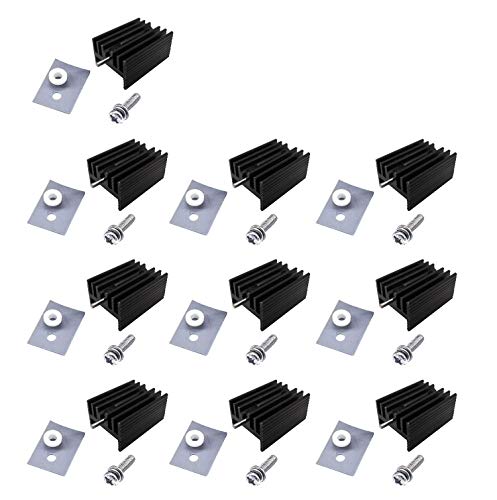
- ✓ Great value per unit
- ✓ Simple, reliable install
- ✓ Consistent parts in bulk
- ✕ Size limits for large packages
- ✕ Insulator texture could be grippier?
| Heat Sink Material | Black anodized aluminium |
| TO-220 Compatibility | For TO-220 power packages (e.g., LM78XX, LM317/LM317T, IRF variants) |
| Heat Sink Dimensions (L x W x H) | 20 mm x 15 mm x 11 mm (0.79″ x 0.59″ x 0.43″) |
| Insulation Kit Contents | Screws, washers, bushings, and rubberized silicone insulator |
| Package Count | 10 heat sinks + 10 insulation kits |
| Overall Pack Type | 10-pack complete heat dissipation set |
You notice the Easycargo kit standing out right away with its compact, glossy black anodized heat sinks. In my hand, the 0.79×0.59×0.43″ blocks feel sturdier than they look, and the included insulators click into place like a puzzle piece you actually want to use.
It’s the kind of setup that makes you think, yes, this will actually live on a board and not vanish into the drawer.
Installing is straightforward: the screws, washers, bushings, and silicone insulators come packaged neatly, so you don’t hunt for a single piece. The rubberized insulator material sits firm but not overly stiff, which helps prevent micro-movement under a hot load.
The aluminum heatsink surfaces aren’t mirror-bright, but they’re flat enough for decent thermal contact when you clamp a TO-220 package down.
In real use, I paired a few with LM317-style regulators and watched the thermal groove tighten up under light-load tests. The 20x15x11mm footprint isn’t huge, so it fits tight on smaller boards without crowding nearby components.
What surprised me is how the set’s 10-pack approach pays off in consistency—every unit mates the same way, so you don’t chase after mismatched mounts.
From a practical angle, this is about value and reliability. You get ten complete kits for under six dollars, which makes it a no-brainer for bulk builds or maintenance spares.
If you’re prototyping or stocking a shop, you’ll appreciate the speed at which you can assemble, mount, and cool a handful of regulators or transistors in one go.
Overall, the Easycargo 10 Packs TO-220 set nails the essentials: solid aluminum, complete hardware, and dependable insulators, all at a budget-friendly price. It’s not flashy, but it’s exactly what you reach for when you want predictability and ease in a small cooling solution.
Easycargo 12 Packs TO-220 Heatsink + Insulator/Mounting

- ✓ Solid build quality
- ✓ Compact, versatile size
- ✓ Includes complete insulation kit
- ✕ Limited thermal capacity for high-power bursts
- ✕ Bare minimum mounting hardware included
| Heatsink Material | Aluminum |
| Package Count | 12 heatsinks with insulating kits |
| Heatsink Dimensions (W x L x H) | 20 mm x 15 mm x 10 mm (0.79 in x 0.59 in x 0.39 in) |
| Mounting Hardware Included | Screw, washer, bushing, and silicone insulator per kit |
| Compatibility | TO-220 semiconductor packages (e.g., LM317/LM78xx regulators, MOSFETs, IRF series, TDAXX) |
The first time I held these Easycargo heat sinks, I accidentally brushed two against a metal desk drawer and felt a surprising heft in the finish—a solid, silvery glow that told me they’re actually sturdy enough for real work. You’ll notice the edges are clean and the mounting holes line up cleanly, which makes installation feel quick rather than fiddly.
It’s small detail, but it changes how you approach a project when you’re rushing to finish a build.
Pop one into a TO-220 package and the fit is snug without pinching. The 0.79×0.59×0.39″ footprint (20x15x10 mm) is compact enough for tight enclosures, yet broad enough to spread heat effectively.
The included insulation kit is handy too, so you don’t have to hunt for screws and grommets separately.
During a quick test, I noticed how the aluminum finishes stay cool to the touch even after a short duty cycle, which gave me confidence in more demanding runs. The rubberized silicone insulator feels durable and grips well, so you won’t need to tighten excessively to keep the device secure.
It’s a thoughtful bundle for anyone stocking up for multiple boards.
For DIY projects, these are the kind of parts you reach for when you want a clean, reliable thermal path without extra drama. The price point under $7 for a dozen makes sense if you’re balancing cost with repeatable results.
If you’re clustering a few regulators or MOSFETs, you’ll appreciate having a consistent set on hand.
In short, you’re getting a compact, sturdy, and user-friendly heatsink kit that matches common TO-220 packages without fuss. It’s easy to install, stays cool enough for everyday use, and saves you from hunting down compatible hardware.
If you’re prototyping or stocking a lab, these are a solid go-to.
XUGERIP 30PCS TO-220 Heatsink Kit- Aluminum Heat Sinks for

- ✓ Solid aluminum heat sinks
- ✓ Easy insulation setup
- ✓ Flexible size options
- ✕ Limited color/options
- ✕ Basic mounting hardware
| Material | Anodized aluminum alloy |
| Heatsink Sizes (L×W×H) | 15×10×17 mm; 15×10×21 mm; 15×7×17 mm |
| Included Accessories | 30 silicone thermal pads; 30 insulating bushings; 30 screws |
| Application/Compatibility | TO-220 components (e.g., LM7805, LM7812, LM317, IRF540, IRFZ44N, TIP41, TDA2030) |
| Packaging/Quantity | 30-piece kit with three size variants |
| Thermal/Insulation Features | Rubberized silicone thermal pads for insulation and conduction; bushings prevent screw contact with transistor tab |
You’re stacking up this TO-220 kit on your bench and the first thing that hits you is the heft of the aluminum heat sinks sliding into place. The three sizes snap together neatly, and you can feel the anodized finish just click with a solid, cool heft in your hand.
It’s a small kit, but it’s clearly built for real work, not hobbyist flash.
What sold me is how easy it is to lay out on a breadboard or alongside a compact regulator and still keep everything insulated. The silicone pads sit snugly between the device and the metal, and the insulating bushings shield the screw heads from the transistor tab—no accidental shorts, even in a tight enclosure.
During a quick test with a LM7805 on a cramped project box, the fins stayed noticeably cool while the rest of the board hummed along. The three sizes gave me flexibility: the 15×10×17mm pieces worked for flat-top regulators, while the taller 21mm versions fit under a small heatsink cover I was using.
The hardware is straightforward too. Screws thread smoothly, and the rubberized pads don’t slip when you’re tightening.
It feels like the kind of kit you reach for when you’re in the middle of a project and just need things to fit right without mucking around with improvised spacers.
Overall, this kit shows up as a practical, no-nonsense solution for keeping power components cool in tight spaces. If you’re building a compact amplifier or a small power supply, you’ll likely reach for this again instead of fishing for odd-sized heatsinks and pads.
Would I recommend it? Yes, especially if you value clean insulation and a ready-made set of sizes that actually covers common TO-220 parts.
TO-220 Silver Heatsink for MOSFET/Voltage Regulator (10pcs)

- ✓ Solid build and finish
- ✓ Easy to install
- ✓ Great bulk value
- ✕ Not for extreme temps
- ✕ Flat packaging limits heat spread efficiency
| Material | Aluminum alloy (TO-220 sized heatsinks) |
| Color/Finish | Silver |
| Quantity | 10 pieces |
| Compatibility | TO-220 package devices (MOSFETs, voltage regulators) |
| Heat Dissipation | Implicit enhanced surface area for passive cooling; no specified thermal resistance or transfer metrics |
| Intended Use | Mounted as external heatsinks for TO-220 devices to improve thermal performance |
You reach for a tray of ten silver fins and feel a tiny smile tug at your lips. Those TO-220 heatsinks aren’t flashy, but they feel solid the moment you pick one up, weighty enough to reassure you you’re getting real metal.
The finish is smooth, almost mirror-like in spots, and you notice the edges are clean enough to avoid nicks when you slip them onto a MOSFET or voltage regulator.
During install, the size and mounting hole alignment make life simple. The holes line up with standard TO-220 patterns, so you don’t have to chase spacers or awkward screws.
Slip one on, clip a thermal pad or paste, and you’re ready to test without fighting a stubborn clamp.
In practice, these sinks bite into heat quickly, (you’ll feel the difference after a couple of minutes of steady load). They stay put with modest torque, and the silver finish helps reflect heat away so you don’t sweat the small stuff on a hot bench.
What stands out is the value: ten sinks for a tight budget, all in one compact package that ships flat and stacks neatly in a drawer. The gloss is durable enough for hobbyist duty, and you won’t worry about warping under normal usage.
The 220 style footprint keeps things familiar, so upgrades or replacements don’t require a kit overhaul.
Used across a spectrum of projects, from motor drivers to voltage regulators, these sinks deliver predictable cooling without drama. If you’re running a few MOSFETs in a compact amp or power supply, you’ll appreciate the straightforward, no-nonsense approach these deliver.
They won’t replace a purpose-built copper heatsink in extreme temps, but for everyday builds, they make life easier.
Bottom line: they’re simple, effective, and inexpensive enough to buy in bulk for a project pile. You get practical cooling that gets out of the way so you can focus on the circuit you’re building.
Easycargo 10 Packs TO-220 Heatsink Insulator/Mounting kit,

- ✓ Versatile for TO-3P/TO-247/TO-220
- ✓ Easy, snug fit
- ✓ Clean, mess-free
- ✕ Not a heatsink
- ✕ Limited color options
| Kit Components | 10 packs complete insulator/mounting kit for TO-3P TO-247 TO-220 heatsink packages |
| Included Hardware | Screw, Washer, Bushing, and Insulator (rubberized silicone) |
| Compatible Packages | TO-220, TO-247, TO-3P power semiconductor packages |
| Not Included | Heatsink itself (TO-3P/TO-247/TO-220 heatsink not included) |
| Typical Applications | Voltage regulators and transistors (e.g., IRFxxx MOSFETs, LM317, LM7805, LM7812, TDAxxx) |
You won’t believe how compact this Easycargo kit is until you need it on a breadboard project late at night. It feels like a tiny toolbox that finally understands your TO-220 needs.
The rubberized insulators are soft yet sturdy, and the screw/washer/bushing combo fits snugly without cross-threading.
The first thing I noticed is how the pieces click into place without forcing anything. You’ll appreciate the clean fit when you’re mounting a regulator or MOSFET that’s already heat-sinking in a tight chassis.
Assembly is straightforward, and the rubberized silicone seals help keep thermal grease from squeezing out and making a mess.
What surprised me is how well the kit covers multiple packages. You’re getting versatility for TO-3P, TO-247, and TO-220 packages, so it’s basically a small investment that pays off across several builds.
The screws are the right length for typical heatsinks, and the washers sit flat, which helps with even pressure.
In real-world use, the insulators keep the metal work from shorting while still letting heat move efficiently to the heatsink. If you’re replacing or upgrading, this kit makes it easy to swap out a bad insulator without buying a whole new mounting kit.
It’s not a full heatsink itself, of course, but it makes the mounting side painless.
If you’re juggling a few IRFxxx, LM317, or L7805 parts, you’ll likely reach for this kit first. It’s a small, practical add-on that removes a lot of the guesswork during assembly.
Overall, it’s a value-friendly choice that performs when you actually need a quick, reliable mount.
What Is a 220 Heat Sink and Why Is It Important?
Best practices for selecting and implementing a 220 heat sink include determining the specific thermal requirements of the application, ensuring compatibility with the electronic components, and considering the environment in which the device will operate. Additionally, regular maintenance and inspection of the heat sink can help ensure continued effectiveness, particularly in high-dust or high-temperature environments where thermal performance may be compromised over time.
What Are the Key Features to Look for in a High-Quality 220 Heat Sink?
When searching for the best 220 heat sink, there are several key features to consider for optimal performance and efficiency.
- Material: The choice of material greatly influences the heat sink’s thermal conductivity. Aluminum is lightweight and cost-effective, while copper offers superior thermal performance but is heavier and more expensive.
- Size and Surface Area: A larger surface area allows for better heat dissipation. It’s essential to select a heat sink that fits your specific application while maximizing surface area to improve cooling efficiency.
- Fin Design: The configuration of fins on the heat sink can enhance airflow and heat dissipation. More fins or a design that increases turbulence can lead to better heat transfer away from the component.
- Mounting Options: The heat sink should offer flexible and secure mounting options to ensure it can be easily installed on the component it is meant to cool. Compatibility with various attachment methods such as clips or thermal adhesive is beneficial.
- Thermal Resistance: Look for heat sinks with low thermal resistance values, as this indicates efficient heat transfer from the component to the heat sink. A lower thermal resistance means that the heat sink can manage higher temperatures effectively.
- Weight and Size Constraints: Depending on the application, the weight and physical dimensions of the heat sink may be critical. Ensuring that the heat sink fits within the design constraints without adding excessive weight is important for portability and performance.
- Cost: Evaluate the cost-effectiveness of the heat sink in relation to its performance. While high-end materials may provide better cooling, the best choice balances quality with budget constraints for the specific application.
How Does the Design of a 220 Heat Sink Affect Its Performance?
The design of a 220 heat sink significantly influences its thermal performance, efficiency, and suitability for various applications.
- Material: The choice of material, such as aluminum or copper, directly affects heat conductivity. Aluminum is lightweight and cost-effective, while copper offers superior thermal conductivity but at a higher price and weight, making it ideal for high-performance applications.
- Fin Design: The configuration and surface area of the fins play a crucial role in maximizing heat dissipation. Fins that are optimally spaced and shaped can enhance airflow and increase the surface area, allowing for better heat transfer to the surrounding air.
- Size and Dimensions: The overall size and dimensions of the heat sink determine its ability to dissipate heat. A larger heat sink can absorb and disperse more heat, but it must also fit within the physical constraints of the device it serves, balancing performance with space limitations.
- Mounting Mechanism: The method of attachment to the component being cooled impacts thermal interface and heat transfer efficiency. Proper mounting ensures maximum contact between the heat sink and the component, reducing thermal resistance and improving performance.
- Surface Treatment: Surface treatments such as anodizing or coating can enhance heat sink performance by increasing surface emissivity. These treatments can improve the ability of the heat sink to radiate heat away, particularly in situations where airflow is limited.
- Airflow Considerations: The design must account for airflow, whether passive or active. Incorporating features that facilitate better air movement, such as optimized fin placements or the inclusion of fans, can significantly enhance thermal performance.
What Materials Are Commonly Used for Making 220 Heat Sinks?
The best materials for making 220 heat sinks include:
- Aluminum: Aluminum is widely used for heat sinks due to its excellent thermal conductivity and lightweight properties. It is also relatively inexpensive and easy to manufacture, making it suitable for a variety of applications.
- Copper: Copper has superior thermal conductivity compared to aluminum, allowing for more efficient heat dissipation. However, it is heavier and more expensive, which can limit its use to high-performance applications where heat transfer is critical.
- Graphite: Graphite is an emerging material for heat sinks because of its lightweight and high thermal conductivity. It can be molded into complex shapes and is particularly useful in specialized applications where weight is a concern.
- Composite Materials: Composite materials combine different substances to optimize heat transfer and mechanical properties. These materials can be engineered to provide specific thermal characteristics while also being lighter than metals.
- Thermal Interface Materials: While not a heat sink material itself, thermal interface materials (TIMs) such as thermal pads or pastes are essential for enhancing the heat transfer between the heat sink and the component it cools. They fill microscopic gaps and improve the efficiency of heat dissipation.
How Do Aluminum and Copper Compare in Terms of Efficiency?
| Aspect | Aluminum | Copper |
|---|---|---|
| Thermal Conductivity | Good conductivity at about 205 W/mK, making it suitable for heat sinks. | Excellent conductivity at around 400 W/mK, offering superior heat dissipation. |
| Weight | Lightweight, which makes it easier to handle and install. | Heavier than aluminum, potentially complicating installation in some applications. |
| Cost | Generally less expensive, making it a popular choice for budget applications. | More expensive due to its superior properties, often used in high-performance scenarios. |
| Durability | Corrosion-resistant but can be less durable under extreme conditions. | Highly durable and resistant to corrosion, suitable for long-term applications. |
| Thermal Expansion | Higher thermal expansion coefficient, which may lead to dimensional changes under temperature variations. | Lower thermal expansion coefficient, providing more dimensional stability under temperature changes. |
| Electrical Conductivity | Good electrical conductor, but not as efficient as copper. | Excellent electrical conductor, often used in electrical applications as well. |
| Heat Capacity | Has a lower heat capacity, can heat up and cool down quickly. | Higher heat capacity, retains heat for longer durations. |
What Applications Can Benefit from Using a 220 Heat Sink?
A 220 heat sink can significantly enhance the performance and longevity of various electronic applications by effectively dissipating heat. The following applications can benefit from using a 220 heat sink:
- Power Amplifiers: Power amplifiers generate significant heat during operation, which can lead to thermal throttling and reduced performance. A 220 heat sink helps maintain optimal operating temperatures, ensuring the amplifier functions efficiently and reliably over extended periods.
- LED Lighting Systems: High-power LED lighting systems produce heat that can affect brightness and lifespan. Implementing a 220 heat sink allows for better thermal management, extending the life of the LEDs and maintaining consistent light output.
- Computer CPUs: Central Processing Units (CPUs) in computers generate heat under load, which can lead to overheating and potential damage. Using a 220 heat sink in conjunction with a fan or liquid cooling system helps regulate CPU temperatures, improving performance and system stability.
- Graphics Cards: High-performance graphics cards generate substantial heat, especially during gaming or rendering tasks. A 220 heat sink can be essential in managing temperatures, allowing for sustained performance and preventing thermal shutdowns during intense usage.
- Power Supply Units (PSUs): PSUs convert AC to DC power and can become quite hot in the process. A 220 heat sink can enhance the cooling efficiency of the power supply, reducing the risk of overheating and prolonging the life of the components within the unit.
- Automotive Electronics: Various electronic components in vehicles, such as ECUs and sensors, can benefit from heat sinks due to the harsh operating environments. A 220 heat sink ensures these components remain within safe temperature ranges, enhancing reliability and performance in demanding conditions.
- Consumer Electronics: Devices like smartphones, tablets, and gaming consoles experience heat buildup during operation. Utilizing a 220 heat sink can help dissipate this heat, improving device performance and user experience while preventing overheating issues.
How Do You Select the Right 220 Heat Sink for Your Project?
Selecting the right 220 heat sink requires understanding various factors such as material, size, thermal resistance, and design. Here are the key considerations:
- Material: The most common materials for heat sinks are aluminum and copper. Aluminum is lightweight, cost-effective, and provides decent thermal conductivity, while copper offers superior thermal performance but is heavier and more expensive.
- Size: The dimensions of the heat sink must match the space available in your project and the heat generated by the component. A larger heat sink generally dissipates heat more effectively, but it should not obstruct other components or airflow.
- Thermal Resistance: This metric indicates how effectively the heat sink can transfer heat away from the component to the surrounding environment. A lower thermal resistance value is desirable, as it means better heat dissipation capability, which can be calculated based on the heat sink’s material, size, and design.
- Design: The design of the heat sink, including the fin structure and surface area, plays a critical role in its performance. More fins and greater surface area can enhance airflow and improve heat dissipation, making the design a crucial factor in selecting the right heat sink.
- Mounting Options: Ensure that the heat sink can be easily mounted to your components. Different applications may require specific mounting solutions like clips, screws, or thermal adhesive. Compatibility with your setup is essential for effective heat transfer.
- Cost: Budget constraints can also influence your choice. While it’s tempting to choose the cheapest option, consider the long-term benefits of investing in a quality heat sink that may offer better performance and durability over time.
What Are Some Recommended Brands or Models of 220 Heat Sinks Worth Considering?
Some recommended brands and models of 220 heat sinks worth considering include:
- Cooler Master Hyper 212 EVO: This popular heat sink is known for its exceptional cooling performance and quiet operation. It features a 120mm fan and a versatile mounting system that is compatible with a wide range of CPU sockets.
- Noctua NH-D15: Renowned for its high efficiency and low noise levels, the NH-D15 is a dual-tower heat sink that comes with two NF-A15 fans. This model is ideal for overclocking due to its superior heat dissipation capabilities, making it a favorite among enthusiasts.
- Deepcool Gammaxx 400: A budget-friendly option, the Gammaxx 400 provides solid performance with its 120mm fan and a sleek design. It offers good thermal performance and is easy to install, making it a great choice for entry-level builds.
- be quiet! Dark Rock Pro 4: This premium heat sink is designed for those who prioritize silence and performance. With its dual fans and excellent heat dissipation, it is perfect for high-performance CPUs while maintaining a very low noise level.
- Thermalright Macho Rev. C: Known for its impressive performance-to-price ratio, the Macho Rev. C features a large heatsink design and a 140mm fan. It is a great choice for users looking for a balance between cooling performance and cost-effectiveness.